|
Futuristic Floating self-sustaining communities // English Version
Name: OCEANIX CITY
Date: 03/04/2019
Program: Public Space
Status: In Progress
Size in m2: 500000
Project type: Commission
Client: OCEANIX
Collaborators: MIT Center for Ocean Engineering, Mobility in Chain, Sherwood Design Engineers, Center for Zero Waste Design, Transsolar KlimaEngineering, Global Coral Reef Alliance, Studio Other Spaces, Dickson Despommier

CITY FROM ABOVE: The city can organically transform and adapt over time,
evolving from a neighborhood of 300 residents to a city of 10,000.
Thirty-six 2-hectare floating neighborhoods and dozens of productive
outposts create a vibrant community that can expand
and contract over time. Image by BIG / Bjarke IngelsGroup
PROJECT DESCRIPTION
By 2050, 90% of the world’s largest cities will be exposed to rising seas. The vast majority of coastal cities will be impacted by coastal erosion and flooding, displacing millions of people, while destroying homes and infrastructure. As part of UN-Habitat’s New Urban Agenda, Oceanix and BIG propose a vision for the world’s first resilient and sustainable floating community for 10,000 residents. Designed as a man-made ecosystem, Oceanix City is anchored in the UN Sustainable Development Goals, channeling flows of energy, water, food and waste to create a blueprint for a modular maritime metropolis.

AERIAL: Located in calm, sheltered waters, near coastal megacities,
OCEANIX City will be an adaptable, sustainable, scalable and affordable
solution for human life on the ocean. Image by BIG / Bjarke IngelsGroup
Oceanix City is designed to grow, transform and adapt organically over time, evolving from neighborhoods to cities with the possibility of scaling indefinitely. Modular neighborhoods of 2 hectares create thriving self-sustaining communities of up to 300 residents with mixed-use space for living, working and gathering during day and night time. All built structures in the neighborhood are kept below 7 stories to create a low center of gravity and resist wind. Every building fans out to self-shade internal spaces and public realm, providing comfort and lower cooling costs while maximizing roof area for solar capture. Communal farming is the heart of every platform, allowing residents to embrace sharing culture and zero waste systems. Below sea level, beneath the platforms, biorock floating reefs, seaweed, oysters, mussel, scallop and clam farming clean the water and accelerate ecosystem regeneration.

CITY ENTRY: OCEANIX City will be an adaptable, sustainable,
scalable and affordable model for communities to live in harmony
on the water. Image by BIG / Bjarke IngelsGroup
By clustering six neighborhoods around a protected central harbor, larger villages of 12 hectares can accommodate up to 1,650 residents. Social, recreational and commercial functions are placed around the sheltered inner ring to encourage citizens to gather and move around the village. Residents can easily walk or boat through the city using electric vehicles.
Aggregating to reach a critical density, six villages connect to form a city of 10,000 residents with a strong sense of community and identity.

TERRACE: Shaded terraces embrace the comfort of indoor-outdoor
spaces, and passive design. Building rooftops fan to self-shade
internal spaces and public realm below. Image by BIG / Bjarke IngelsGroup
A larger protected harbor is formed in the heart of the city. Floating destinations and art, including six specialized landmark neighborhoods with a public square, market place and centers for spirituality, learning, health, sport and culture create destinations drawing residents from across the city and anchoring each neighborhood in a unique identity. All communities regardless of size will prioritize locally sourced materials for building construction, including fast-growing bamboo that has six times the tensile strength of steel, a negative carbon footprint, and can be grown on the neighborhoods themselves.

OCEANIX CITY FROM ABOVE at night: City Image by BIG / Bjarke IngelsGroup
Floating cities can be prefabricated on shore and towed to their final site, reducing construction costs. This paired with the low cost of leasing space on the ocean creates an affordable model of living. These factors mean that affordable housing can be rapidly deployed to coastal megacities in dire need. The first Oceanix Cities are calibrated for the most vulnerable tropical and sub-tropical regions around the globe.

PLATFORMS FROM UNDERWATER: Below sea level, beneath the platforms,
biorock floating reefs, seaweed, oysters, mussel, scallop and clam farming clean
the water and accelerate ecosystem regeneration. Image by BIG / Bjarke IngelsGroup

NEIGHBORHOOD BOARDWALK- Northern Europe: Platform architecture
will be site-specific and responsive to social, political, environmental
and economic aspects of each location. Image by BIG / Bjarke IngelsGroup

VILLAGE HARBOR NIGHT VIEW: At night the inner harbor continues to buzz
as night-markets, event spaces and residences create a lively community.
Image by BIG / Bjarke IngelsGroup

VILLAGE HARBOR DAYTIME: Socializing, play, and commerce are concentrated
around the sheltered inner harbor. Platform edges activate the city with
social programs, protect it from the wind, produce food, and dock boats.
Image by BIG / Bjarke IngelsGroup

PRODUCTIVE EDGE: A flexible, buoyant skirt accommodates food
production, boat docks, wind-breaks and gathering spaces. Low
edges allow residents direct access to the water.
Image by BIG / Bjarke IngelsGroup

NEIGHBORHOOD BOARDWALK- AFRICA: Residents gather, work
and play in an activated public realm. Diverse building terraces
provide indoor-outdoor living and encourage socializing with neighbors.
Image by BIG / Bjarke IngelsGroup

GREENHOUSE: Communal farming is the heart of each neighborhood,
allowing residents to embrace sharing culture and zero waste systems.
Residents grow their own food in daylit outdoor farms.
Image by BIG / Bjarke IngelsGroup

NEIGHBORHOOD BOARDWALK- SOUTHEAST ASIA: Platform
architecture will be site-specific and responsive to social, political,
environmental and economic aspects of each location.
Image by BIG / Bjarke IngelsGroup
PROJECT TEAM
Partners-in-Charge: Bjarke Ingels, Daniel Sundlin
Project Leaders: Alana Goldweit, Jeremy Alain Siegel
Team: Andy Coward, Ashton Stare, Autumn Visconti,
Bernardo Schuhmacher, Carlos Castillo, Cristina Medina-Gonzalez,
Florencia Kratsman, Jacob Karasik, Kristoffer Negendahl, Mai Lee,
Manon Otto, Terrence Chew, Thomas McMurtrie, Tore Banke,
Tracy Sodder, Walid Bhatt, Will Campion, Yushan Huang, Ziyu Guo
|


 תערוכת בוגרי/ות בצלאל 2026
 תערוכת הגמר של בית הספר מוסררה בשנת 2026
 60 שנות ארכיטקטורה בבצלאל : כנס בוגרים/ות והשקת ארכיון חי
 חיסכון של מאות אלפי שקלים – איך אנחנו עושים את זה?
 מה שנשאר תערוכת יחיד | נעמה עילם
 הישג חשוב לזכויות המיגון בתל אביב-יפו - התאחדות האדריכלים ובוני הערים בישראל
 תכנון ועיצוב מטה חברה בברזיל
 למרות הכל: ענף האדריכלות והעיצוב בתנועה
 רענון אביבי לבית: מבצעים והשקות לפסח
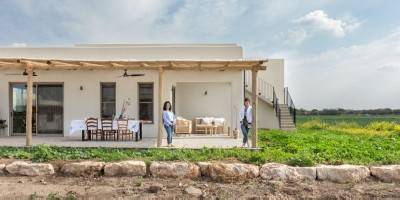 מול הכנרת: בית שמרגיש כמו חופשה - אדריכלות ועיצוב: סטודיו 'רות ולבנה'
  צבע כאמירה של שמחה: השפה האופטימית של סטודיו טולה
 נשים שיודעות לבנות, לעצב ולהוביל
 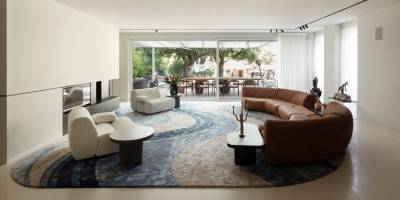 קולקציות 2026 אביב
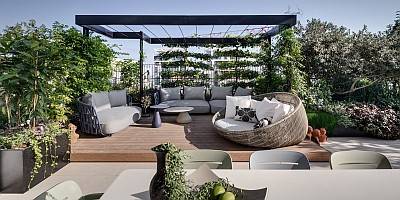 דווקא עכשיו: צאו החוצה מאת שי דוד, מעצב נוף, כרכום
  הגוונים החדשים באקריל - בלורן


