House Max in Perchtoldsdorf close to Vienna
Architect: Caramel's
Property area: 862m²
Floor space: 188m²
Useful area:383m²
Gross floor area: 470m²
Photographer: Hertha Hurnaus
משרד אדריכלים קרמל תכנן בית פרטי בתוספת סטודיו. מטרת הלקוחות היתה: לברוח מהעומס הקדחתני של מרכז העיר וינה, וכך משפחה בת ארבע נפשות ביקשה מקום מגורים באזור הכפרי שיכיל גם סטודיו רחב ידיים לאמנים. אופי הנכס מערב באופן רשמי את סביבות המגורים השונות, הכפרית והאורבנית. כתוצאה מכך נוצר במפלס התחתון סטודיו אמן בגובה 3 מטרים, בחלקו שוכן על המדרון, בחלקו באותו מפלס של הגן. המרפסת המקורה משמשת גם כסטודיו חיצוני.
Above, at street level, you get to the parents' bedroom and the children's bedrooms of the two boys, along with the belonging bathrooms. The green of the crowns of the surrounding trees is everywhere within reach. On the same level, facing the street, there is also the entrance area and the garage with an inconspicuous garage door in the dressing of the facade.
The internal open staircase, pierced from the studio to the top floor, is accompanied by an open-glass elevator. On the upper floor lies the dining, kitchen and living area, which opens to the garden side to a large, partially covered terrace with views towards the Perchtoldsdorfer Heide. An exterior staircase leads directly to the garden with pool and guest house. Facing the street is the kitchen area, with hidden pantry kitchen and a breakfast bar.
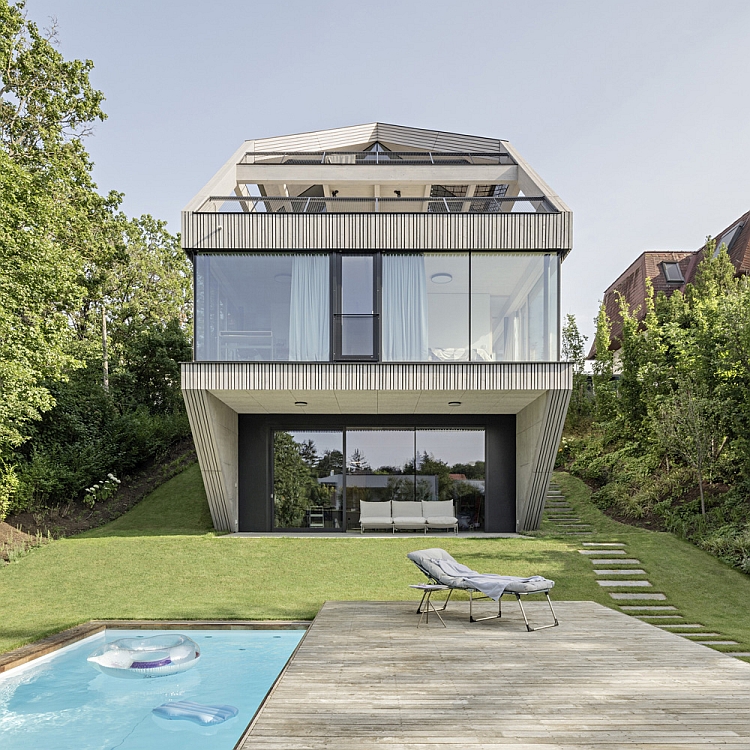
Photo Credit: Hertha Hurnaus
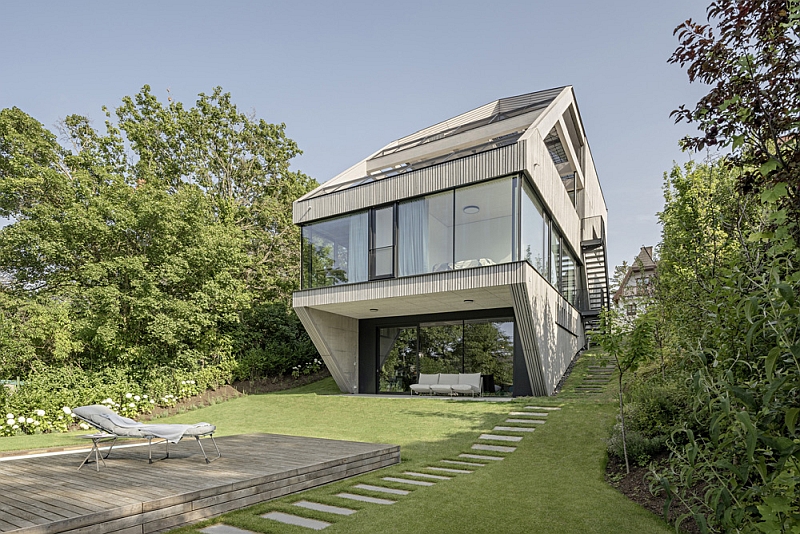
Photo Credit: Hertha Hurnaus
The top floor, designed as a multimedia, study and music room, offers street- and garden-facing partially covered terraces. On the side facing the garden, there is a floor-level 'hammock' instead of a railing to the lower terrace. Here, the view sweeps over the trees and beyond the vineyards all the way to Vienna. A reminiscence of the old attic apartment of the Viennese days. From here, too, an external staircase leads to the lower terrace and from there directly to the garden.
The vertically connected outdoor areas are designed like a kind of scaffolding made up of stairs, railings, openings and partial roofs and enable the residents to gradually and personally appropriate the outside world. It can be played with various add-ons, such as swings, trellis, screens or hammocks.
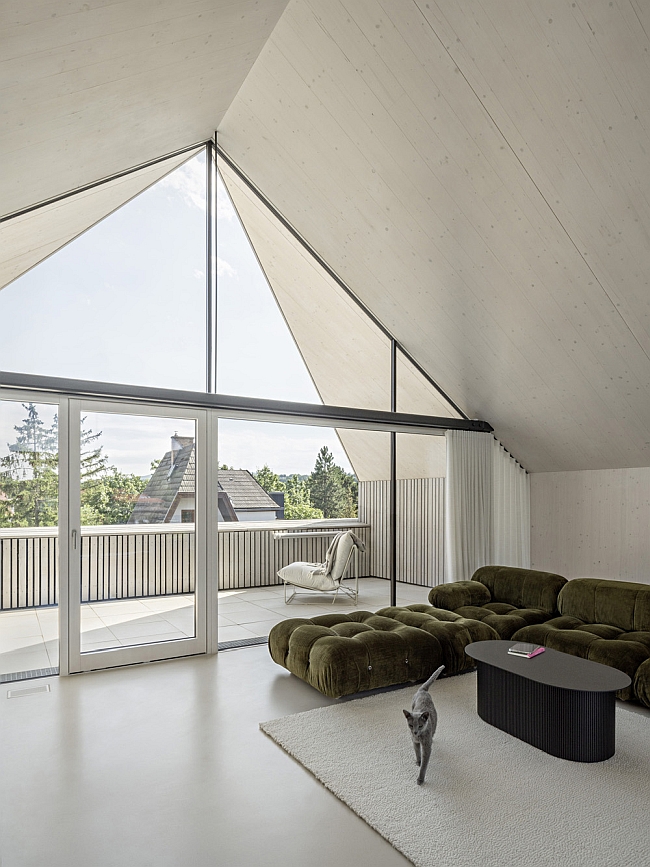
Photo Credit: Hertha Hurnaus
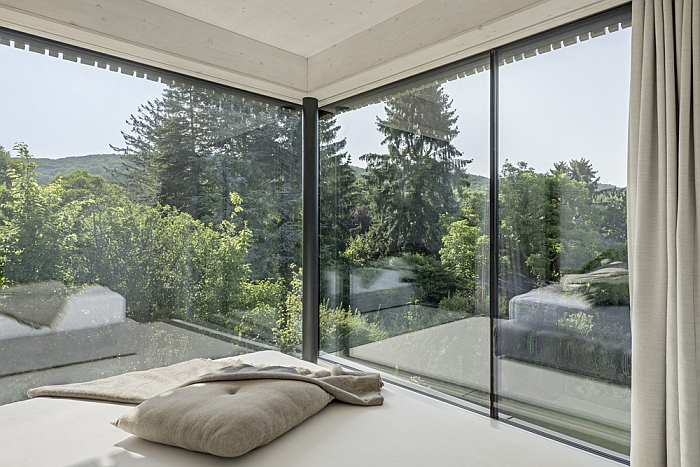
Photo Credit: Hertha Hurnaus
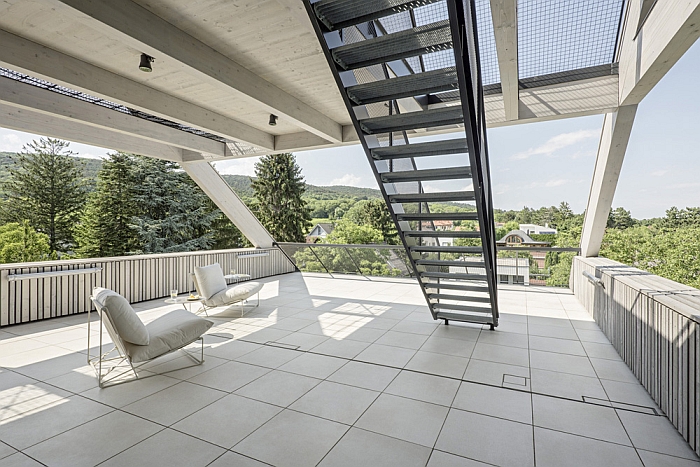
Photo Credit: Hertha Hurnaus
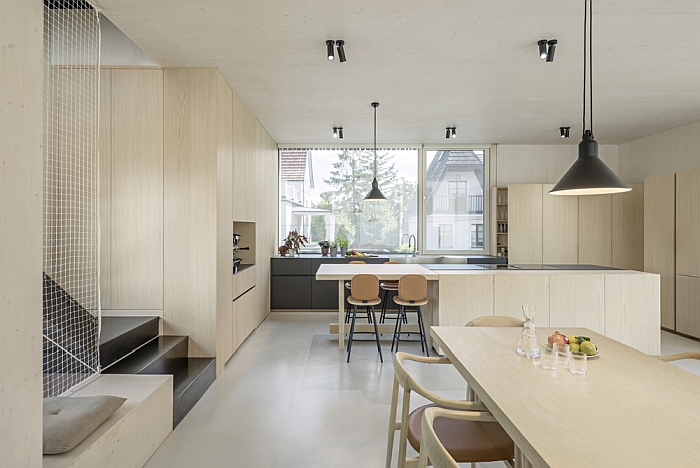
Photo Credit: Hertha Hurnaus
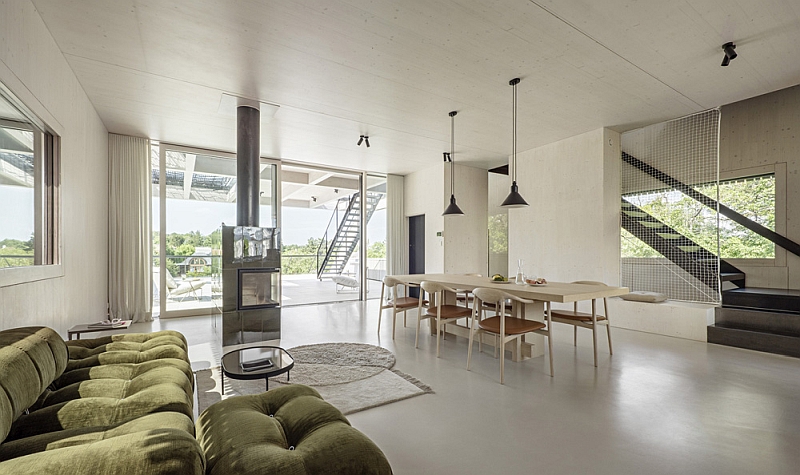
Photo Credit: Hertha Hurnaus
On the street side, the house is inspired by the neighboring houses with gable roofs typical of the area, but reinterprets the roof as a partially roofed outdoor space. There, the large single-family house appears discreet and blends in with the tectonics of the street fronts of the neighboring houses. Towards the garden, however, the house grows imposingly out of the slope and opens up to the landscape.
The lower level, half of which is below ground level, and the garage are of reinforced concrete construction, while the floors above are of timber construction, with wall and ceiling elements of cross-laminated timber, combined with partially visible steel construction. By using untreated wood as a building material, also for parts of the interior finish and the back-ventilated pre-greyed wooden facade, the sustainable and efficient concept of the building is highlighted.
Haus Max is almost self-sufficient thanks to integrated PV elements on the entire roof [Sun-Skin, Eternit with battery storage], deep drilling and a heat pump.
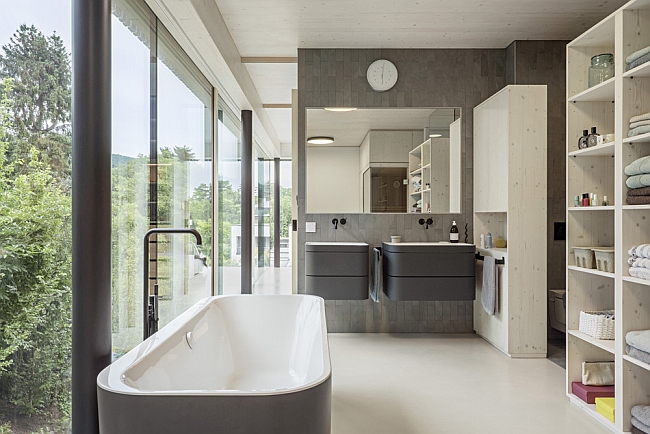
Photo Credit: Hertha Hurnaus
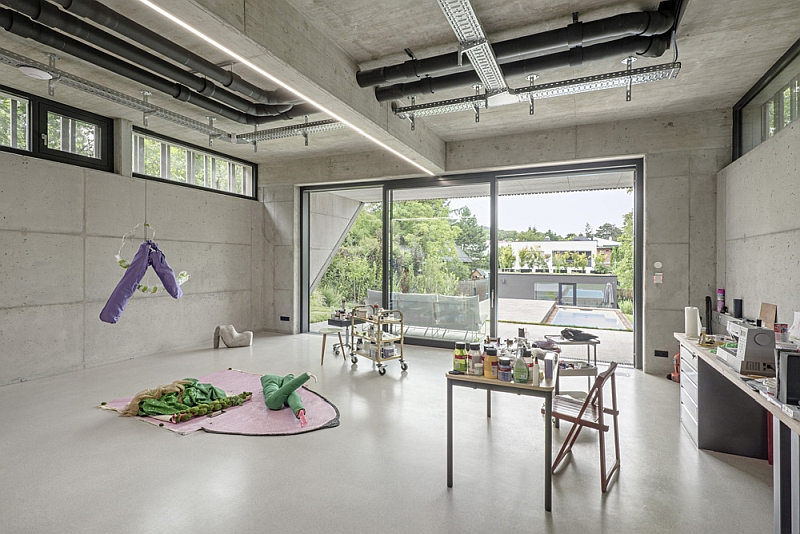
Photo Credit: Hertha Hurnaus
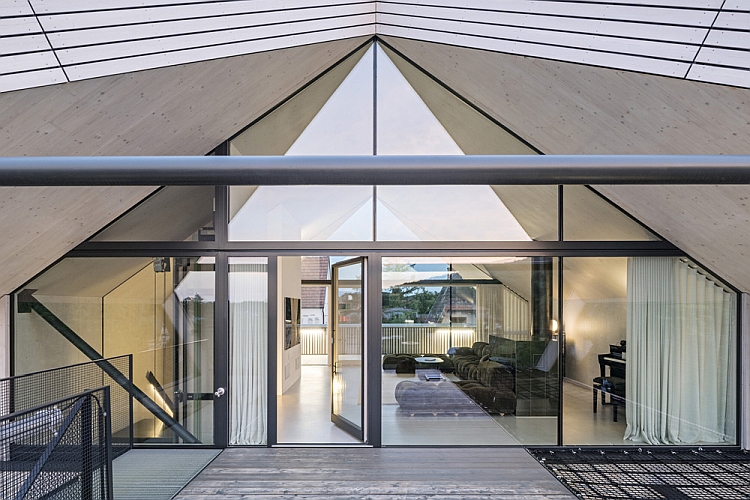
Photo Credit: Hertha Hurnaus
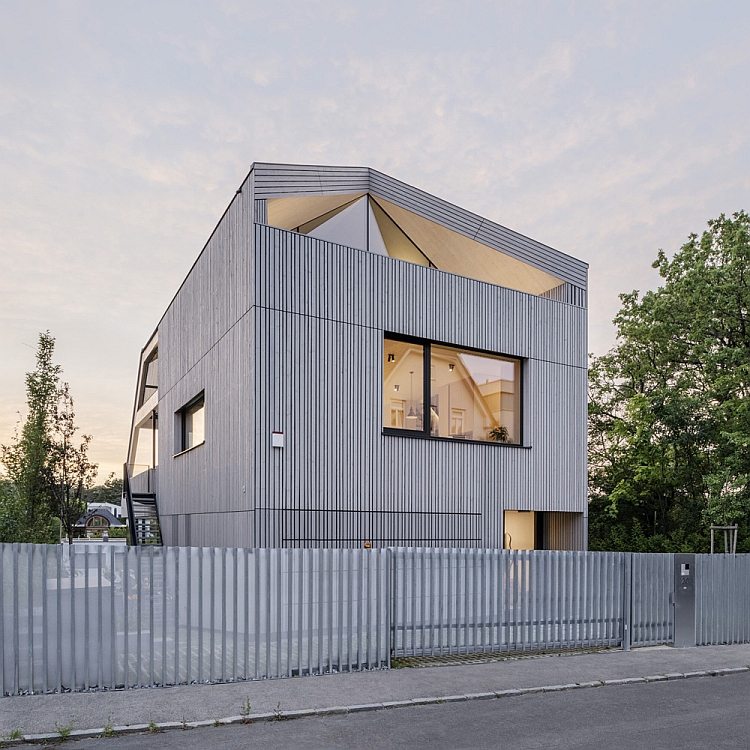
Photo Credit: Hertha Hurnaus
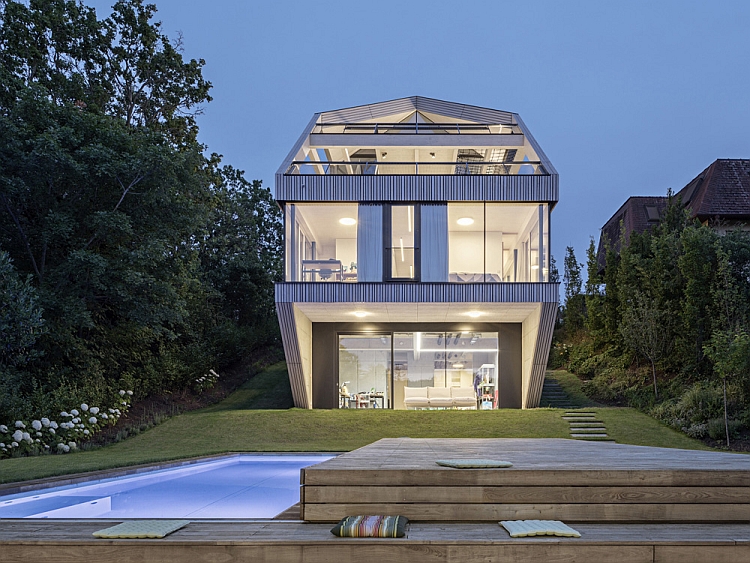
Photo Credit: Hertha Hurnaus
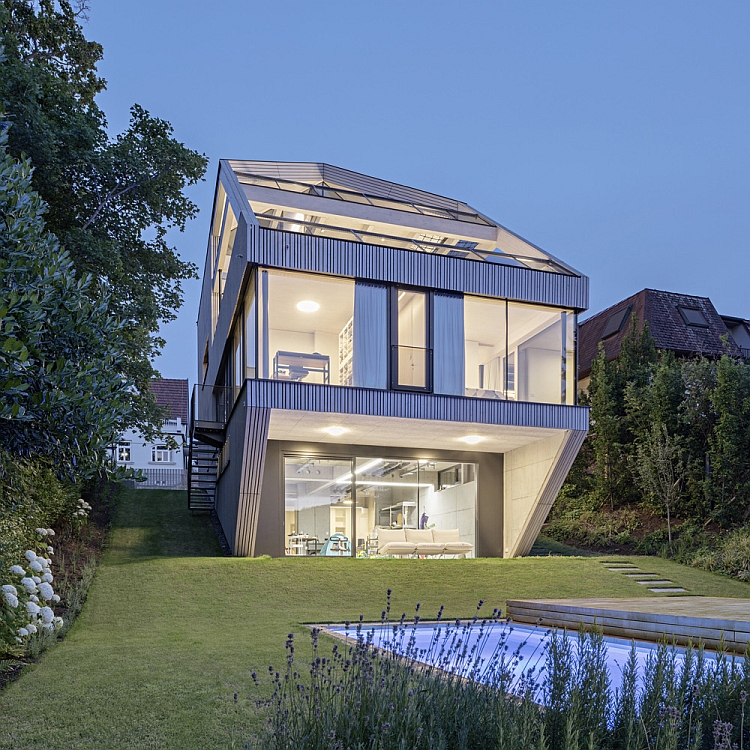
Photo Credit: Hertha Hurnaus
|


 למרות הכל: ענף האדריכלות והעיצוב בתנועה
 רענון אביבי לבית: מבצעים והשקות לפסח
 מול הכנרת: בית שמרגיש כמו חופשה - אדריכלות ועיצוב: סטודיו 'רות ולבנה'
  צבע כאמירה של שמחה: השפה האופטימית של סטודיו טולה
 נשים שיודעות לבנות, לעצב ולהוביל
  קולקציות 2026 אביב
 דווקא עכשיו: צאו החוצה מאת שי דוד, מעצב נוף, כרכום
  הגוונים החדשים באקריל - בלורן
 מלון בוטיק פרטי: דירה בראשון לציון שעוצבה כפרק חיים חדש - מעצבת פנים שני חיוט
 לא רק עיצוב - יצירה מחדש של בית - מעצבת פנים גלית ששון
  הצד השמח של העיצוב: הבחירות שעושות חג בבית
 אהבה על שרטוטים: כשהשיפוץ הופך למבחן הזוגיות
 הוא רצה מודרני. היא חלמה כפרי. והמעצבות? מצאו דרך שלישית
  עולם המטבחים: כל מה שרצית לדעת
 ט״ו בשבט בבית – אדריכלות ועיצוב כדרך חיים המחוברת לטבע


