|
 |
redesigning the modern city. |
|
|
|
Type:
|
competition
|
Registration Deadline:
|
30/7/2002
|
Submission Deadline:
|
18/10/2002
|
Open to:
|
professionals
|
Entry Fee:
|
|
|
Awards: |
first prize: 4.000 euro
second prize: 2.500 euro
third prize: 1.500 euro
2 mentions: 500 euro each
|
Jury:
|
see below
|
ideas competition for the upgrading of the
rozzol melara quarter of trieste
international ideas competition of urban design, open to professionals
eligible for the practice of architect or engineer under 40 years of age.
1. organisers, procedure committee and competition secretariat
organisers
ater-public housing agency of the trieste province, faculty of
architecture-university of trieste, municipality of trieste, province of
trieste, roll of architects, planners, landscape designers and conservation
specialists of the trieste province, ministry of cultural properties and
activities-general directorate for contemporary architecture and art.
competition secretariat
the secretariat for the competition is:
ater-unit` operativa relazioni esterne
piazza foraggi n. 6
34139 trieste
[email protected]
0403999454/0403999203
fax 040390885
hours: 10.00 a.m.-13.00 p.m.
the competition brief is posted on the web site
http://www.units.it/architet/ater/.
2. type of competition
it is an open, anonymous, one stage international ideas competition.
3. object and purpose of the competition
the ater-public housing agency of the trieste province, on the occasion of
the centenary of its founding, announces, together with the faculty of
architecture of trieste, the municipality of trieste, the province of
trieste, the roll of architects, planners, landscape designers and
conservation specialists of the trieste province, the general directorate
for contemporary architecture and art of the ministry of cultural
properties and activities, an international ideas competition for the
upgrading of the borgo san sergio and rozzol melara quarters of trieste.
this brief regards only the rozzol melara area.
the ater of trieste was founded on 14 july 1902 as a municipal institute
for affordable housing [icam] and in 1924 it became the autonomous public
housing institute [iacp]. the ater of trieste is one of the first public
bodies in charge of operating low cost housing in europe. it was taken as
an example in the drafting of the italian legislation on public housing
approved in 1903 and as a model for the foundation of the first institutes
established in italy. throughout the 20th century, the icam-iacp-ater built
about one fourth of the homes of trieste, and became the most important
operator in the field of housing, contributing substantially to the
construction of the city and to the definition of its urban and
architectural image.
the ater of trieste, together with the other important city and national
institutions promoting the competition, wants to take the opportunity of
its centenary not only to look back to its history, but also to reflect
upon the role the institute has played in the growth of the city and in the
improvement of its spaces, as well as to look to the future development of
trieste and its province, and, more broadly to deal with outskirts
upgrading themes.
this competition aims at redesigning the rozzol melara quarter - along with
borgo san sergio, object of the second brief - in order to start a more
general reflection on the conditions of those parts of city promoted by
different public administrations during the 20th century with the aim of
meeting considerable housing needs. these housing complexes are the result
of a unitary scheme involving spaces and facilities as well. but during the
implementation stage, or afterwards, these complexes had already partially
lost their character of being exemplar and recognisable. as expressions of
different ideas of cities and living space, these quarters are significant
evidence of different policies, cultures and techniques, which proposals
should not only seek to upgrade but also to protect and conserve.
in particular, this competition aims to reappraise the meaning, the shape
and the function of collective and relational spaces within the quarter
unit, since we are convinced that these elements can play a fundamental
role in new development processes. during the design phase, these spaces
and their function were to form and represent new communities of citizens.
however, the separation between the construction phase of the buildings and
the implementation of the open space scheme, as well as the different
levels of care and maintenance of the un-built area, has often led to
negative effects on the quality of the entire 'living space', both built
and open.
competitors are asked to submit a project proposal for rozzol melara, which
aims at improving the living space of the quarter and, on the whole, at
redefining its role within the surrounding urban context.
the ater and the municipality of trieste could draw from the proposals
submitted in this competition for future interventions regarding the
aforementioned project site.
4. areas and themes of the project
4.1. the location of the quarter
the housing complex of rozzol melara is located on the eastern edge of the
city of trieste, on a ridge exposed to the north winds but in an ideal
geographic position: the building lies on the slope of the hill at the top
of the rozzol valley which overlooks the city and the sea; the karst ridge,
scarred by some quarries, rises behind the quarter and is separated from it
by the longera valley.
the selection of this location since the design phase, which was carried
out from the late 60s to the early 70s, reflected an intention of
detachment and otherness. this was partially modified by the following new
construction of public housing, along the northern and western borders of
the complex, as well as of scattered small housing units on the slope of
the rozzol valley.
4.2. notes on the original project and on the construction of the quarter
the site of rozzol melara was chosen by the municipality of trieste in 1964
with a plan ex lege 167/62, which envisaged in the peep [public and
economic housing plan] area the construction of a semi-intensive housing
quarter, where several building types [from the row to the tower] had to be
organised following the slope of the ground according to an 'organic' design.
the allotment of the area to the iacp of trieste four years later marks a
reversal of the trend. the designers called to draw up the new urban plan
of the quarter were asked by the institute to 'gather the buildings'. the
design team, co-ordinated by carlo celli, comprised 29 professionals
selected with the collaboration of the local rolls of architects and
engineers; guido ferrara participated for the design of the green spaces.
the initial phases of the project proceed along the lines of the research
carried out by the social studies centre of the iacp and by the
international sociology institute of gorizia. these studies were aimed at
identifying the housing needs of trieste with special reference to the
organisation of social and community services.
the project was drafted between 1968 and 1971, with following variants
during the years until 1974 and finally implemented in 1981. it encompasses
an area of 11 hectares where a building complex accommodating 2500
residents stands [minimum threshold identified by the sociologic analysis].
it comprised 648 flats, a civic and social centre, a health centre, more
than twenty shops, an elementary and a middle school, a parish centre and a
common garage.
the shape of the residential complex is that of a large courtyard building
consisting of two juxtaposed multi-storey l-shaped units which are
connected by a system of covered pathways and collective services forming a
large cross in the central courtyard.
the main aim of the designers was to counter a typical suburban situation,
consisting of 'relatively new buildings, scattered throughout the area
without an organised skeleton', with a structure 'conceived as a landmark
for its quality and concentration of facilities for the organisation of the
associated life' but also as a 'connective tissue of the surrounding homes,
which enables the organisation of the territory ... giving each [urban]
element a function within the wide city scene' [c. celli, 'pubblico e
privato nell'insediamento di rozzol melara', casabella, n.437, 1978].
the inspiring principles of the urban and housing project can be summarised
as follows:
- the choice of high density housing, assumed as both a typical urban
feature and an element able to foster social exchanges; the rejection of
the model of a single, finished self-sufficient building, which is
countered with a building thought as part of the urban fabric, as
generative element of 'complex relations which establish a dialogue with a
wider surrounding' [ibid.]; in search of integration with the surroundings,
the quarter should have played the role of polarising and upgrading element
of the urban periphery;
- the organisation of the residential complex not as an aggregate of
dwelling cells, but rather as 'a multiple function spatial organisation',
where homes and facilities should have integrated, acquiring meaning and
value within their mutual relation;
- the research of a unitary image through the design of the central space:
a large court-square which had to be both a symbolic space of the settled
community and a 'place where the relation between the urban surrounding and
the new settlement occurs' [ibid., p. 37];
- the separation of pedestrian and vehicular traffic with the creation of a
single road axis across the courtyard serving the two-storey underground
garage;
- the construction of a close relationship between public and private
areas, through a network of public and collective spaces connecting and
integrating the system of private living space.
the large courtyard building is strongly characterized by the system of
open and covered spaces for collective use, which defines an ordering
'grid' arranged on two levels: 'at the lower floor it consists of a
pedestrian indoor level walkway which links the most important facilities',
while at the upper floor it consists of a similar walkway connected by two
bridges to the outdoor promenade on the roof of the lower building; shops
for day to day provisions, common loggias and the staircase lobbies open
onto the internal roads.
purposefully some of these collective spaces were not planned to
accommodate facilities, but were imagined to be available for any
collective activity autonomously run by the residents.
the open space design of rozzol melara also drew inspiration from the quest
for a different way of living and it also aims at consolidating
relationships within the community.
by identifying categories of users of the 'quarter's green areas', the
project analysed their different needs, proposing the construction of
leisure facilities to enable the integration of spaces dedicated to
different age ranges: 'a series of facilities open to anybody who dwells
and 'lives' in the quarter without distinction, so that children, parents,
teachers and elders can find a reference in them, so that they can become
the tools of an associative life of a higher social and cultural level' [g.
ferrara, 'la progettazione del verde', edilizia popolare, n. 123, 1975].
the project paid special attention to the following themes:
- the design of a green 'connective tissue' and of a network of routes
which articulate open structures and spaces for different uses;
- the creation of an open space, marked by a 'theatre' platform placed in
close relation with the social centre located in the intersection of the
services. it had to be the place where the 'social moments' of the quarter
would concentrate;
- the definition of different playgrounds according to the age of the users
['play yards', 'wild areas', etc.];
- the involvement of the dwellers in the creation of their living environment.
the current problems of the quarter are due partly to the management of the
complex after its construction, partly to the lack of urban planning
control of the zone where the building stands. on one hand, we have
witnessed an impoverishment of the potentials of the common places system
with the abandonment of many spaces which were to accommodate different
services and facilities. these instead have often found a different
location just outside the residential courtyard. on the other hand, the
ever more numerous buildings built afterwards around the complex by
co-operatives and other bodies have thwarted some of the potential
relationships which the original project had conceived.
4.3. the competition area and the suggested project themes
the competition area encompasses the entire rozzol melara district, vie
marchesetti and forlanini mark the limit to the east and to the west. the
boundaries shown in the attached planimetry are to be considered as an
indication and can be better defined and in case modified during the design
process.
the project will have to satisfy the following requirements:
- the upgrading of the large central space of the courtyard-square, if
necessary even with demolition and/or reconstruction, aimed to restore its
original function of meeting and relational place between the community
living in the quarter and the people living in the area gravitating towards
it;
- the redefinition of the relation between residence, basic service system
and collective spaces which the original project located along the roads
within the two l-shaped buildings. these latter are today scarcely utilised
and are often abandoned;
- the redesign of marginal areas of the complex, in particular of those
facing towards the city of trieste, where there are some of the services
'expelled' from the central building and onto which the new residential
buildings developed since the 80s face. these currently appear unable to
establish a relation with the large building.
other possible project themes could concern:
- alternative solutions to the current vehicular access system, consisting
of the only diagonal road crossing the quadrilateral and of the two-storey
semi-underground car park;
- proposals taking into consideration the design of the ground not only
inside the central courtyard but also outside it.
5. participation terms and conditions
5.1. the competition is open to individual architects and/or engineers, as
well as grouped in working teams. at the time of the publication of the
competition brief the architect and/or engineer, according to the
competition rules, must hold a professional qualification of architect or
engineer as defined by the legal requirements in existence in their country.
if in the country of residence the professional qualification is not
defined by law, the competitors must hold a diploma, examination
certificate or other qualifying certificate listed in the eu directive
85/384/eec or 89/48/eec.
in any case the participants, at the time of the publication of the
competition brief, must be eligible to practise their profession in their
respective country, and not restricted in the their self-employed
profession by any legislative limitation or disciplinary measure.
5.2. the following may participate in the competition:
- individual persons who comply with all the conditions set out in
paragraph 5.1.;
- juridical persons, provided that the party or association is able to
comply with the task of the competition. in the case of juridical persons,
at least one of the members must hold the qualifications required to
individual persons for the participation in the competition and this
information must be reported in the authorship declaration. this person
will be the sole interlocutor with the competition organisers;
- temporary associations of professionals, with the indication of the
architect or engineer who is the person in charge of the design project and
representative of the group [team leader].
5.3. competitors may participate individually, in associations or temporary
groupings. each group when entering the competition is to designate a
member as the team representative and sole interlocutor with the organisers.
5.4. each participant can submit only one project. each party may not
participate contemporarily in more than one group on pain of
disqualification of the party as well as all the groups participating with
him. every juridical person and every association of professionals will
each be considered a participant in the competition. for this reason, even
associations may not participate in the competition with more than one
project. any infringement will lead to the disqualification of the projects
submitted by the offending party.
5.5. the participants in the competition may employ one or more
collaborators, qualified personnel, who need not comply with the
participation requirements. these figures are to be indicated in the
authorship declaration although their participation will not influence the
jury's assessment.
5.6. every participant is to carefully check the necessary requirements for
participation. participation takes place on one's own responsibility.
5.7. all the parties participating in the competition [except for
collaborators] must be under 40 years old at the date of the publication of
this brief.
5.8. the presentation of the projects is to be made anonymously. any form
of identification or distinguishing mark which might reveal the name of the
competitors is to be omitted. should the postal service require the
indication of the sender, the display shall be that of one of the
competition organisers.
6. application procedure
in order to participate in the competition, applications must reach the
secretariat address no later than 12.00 a.m. on 31 july 2002 by mail or
fax. the applications must be drawn up on the form downloadable from the
web site www.units.it/architet/ater/.
upon entering the competition the name, surname, date of birth, address,
telephone, e-mail and fax of the candidate or group leader, who is to be
the reference for any communication, must be indicated and undersigned by
every member of the team.
7. criteria of ineligibility
7.1. the competitors who do not respect the terms of the application and/or
the delivery of projects, or who infringe the principle of anonymity of
submissions will be disqualified.
7.2. the following may not participate in the competition:
- spouses, relatives and in-laws up to the third degree of the jury members;
- employees of the competition organisers or those who hold a co-ordinated
and continuous collaboration with the members of the jury;
- those who have taken part in drawing up the brief and the attached
documents as well as those who are continuous collaborators of the
organising bodies and institutions.
8. competition documentation
the organisers will provide the participants with the following materials:
- the competition brief and its attachments;
- iconographic documentation;
- outline of the competition area;
- cartography and application form.
all the materials are available on the web site www.units.it/architet/ater/.
9. submission details
design projects are to be submitted on 3 a1 horizontal tables and in a
bound album size a3, composed of a maximum of 12 pages plus the cover. both
the tables and the album cover shall bear in the top right corner a motto
with a maximum of 40 characters including spaces, 1 cm high, and on the
tables the arabic number corresponding to their presentation order.
under no circumstances may the competitors infringe the anonymity with
symbols, marks or other identifying elements.
texts may be written in italian or english. the projects required shall use
the decimal metric system as the system of measurement and contain a metric
graphic reference in order to enable publication in reduced formats.
the 3 tables, black-and-white or colour, mounted on light rigid panels
shall contain, in the scale deemed most appropriate:
- a general plan of the area with the inclusion of the project;
- plans, elevations and meaningful sections of the project;
- axonometric drawings, perspectives, photomontages and any other graphic
representation suitable for the purpose of illustrating the project.
the black-and white or coloured album shall contain:
- a report of 8000 characters including spaces maximum, in case illustrated
with pictures, sketches and graphic diagrams, containing the guiding
criteria for the project and its urban integration in the context;
- a reduced scale reproduction of the 3 tables of the project.
10. submission delivery
the projects must be delivered in a sealed envelope, bearing the title of
the competition on the outside.
the envelope shall contain:
- the 3 tables and the album;
- a cd-rom labelled with the chosen motto containing three .tiff extension
files representing the tables submitted, one .rtf file with the report and
a 2000 characters [including spaces] maximum abstract of the report;
- an anonymous opaque sealed envelope containing the particulars of the
competitor or of the members of the group. the envelope must also contain:
the designation of the group leader undersigned by all the group members
and their names, including those of possible consultants and/or
collaborators; a declaration of each competitor attesting compliance with
the necessary participation requirements [the competition secretariat will
verify the contents of the self-declaration and disqualify from the
competition in case it proves to be even partly untrue]; the authorisation
to exhibit and possibly publish the design projects and to cite the names
of the designers, non-winners as well. on each sheet the motto chosen by
each competitor or team will have to be indicated.
the projects must reach the competition secretariat by 12.00 am on 18
october 2002. in those cases in which delivery of projects is assigned to a
carrier [state postal service or authorised couriers], they must be
postmarked no later than 12.00 am on 18 october 2002 [the postmark is
proof] and the package must be received within the following seven days.
any delay is considered reason for exclusion. the competition organisers
are not responsible to the competitors in case of loss of the package.
11. schedule
application deadline: 12.00 am on 31 july 2002.
submission deadline: 12.00 am on 18 october 2002.
competition results will be announced by 30 november 2002.
the awarding of prizes will coincide with the opening of the exhibition
1902-2002 icam-iacp-ater: a century of public housing in trieste.
12. jury
the jury is composed of: manuel de las casas, bernardo secchi, the president of the ater, the dean of the faculty of architecture of trieste,
paola di biagi coordinator of the initiatives for the ater centenary and
professor at the faculty of architecture of trieste, the major of trieste,
the land planning councillor of the municipality of trieste, the president
of the trieste province, the president of the roll of architects, planners,
landscape designers and conservation specialists of the trieste province,
the general director for contemporary architecture and art of the ministry
of cultural properties and activities. each representative of the
organising bodies can possibly appoint a deputy.
the two secretaries for the competition will take part in the meeting of
the jury without right of vote.
the jury will judge the entries within 40 days from the submission date.
13. jury proceedings and competition results
the jury's proceedings will be secret, and considered effective with the
presence of at least half plus one of its members. the president will be
appointed by the jury members during the first meeting.
the jury deliberation is unappealable. a draft of the minutes containing
the jury's proceedings and the judgement on the projects will be drawn up
during the meeting and signed by the jury members at the end of the
proceedings.
results will be sent by registered post to the winners. the names of the
winners and the jury's report will be posted on the web site
www.units.it/architet/ater/.
14. prizes and honourable mentions
the competition overall prize money amount totals 9,000 euro, divided as
follows:
the jury can modify the number and the division of the prizes if by general
consent it considers that the quality of the projects does not comply with
the fixed division of the prize money.
the jury reserves the right to mention, without reward, design solutions
showing innovative aspects.
15. publication of competition results
the prize-winning entries and honourable mentions will be displayed in the
exhibition 1902-2002 icam-iacp-ater: a century of public housing in trieste.
the ater reserves the right to publish the project proposals in the
modality deemed most appropriate [catalogue of events, national and
international magazines, web sites]. moreover, the ministry of cultural
properties and activities will decide whether to publish winning entries
and honourable mentions on its web site.
16. ownership of the design projects
authors hold rights of intellectual ownership of their projects. the
winning entries or honourable mentions will become the property of the ater
of trieste. the remaining entries will be available to the competitors who
may collect them at their own expense, from the competition secretariat, on
furnishing proof of identity, after 3 march 2003 and no later than 30 april
2003.
after this date the ater will no longer be held responsible for the
conservation of the submitted materials.
attachments
references regarding rozzol melara [in chronological order]
- g. ferrara, 'la progettazione del verde', edilizia popolare, n. 123,
1975, pp. 72-82.
- ndr, 'iacp di trieste, quartiere di rozzol melara', edilizia popolare, n.
133, 1976, pp. 83-86.
- ndr, 'celli-tognon: opere e progetti', casabella, n. 419, 1976, pp. 48-57.
- c. celli, 'pubblico e privato nell'insediamento di rozzol melara',
casabella, n. 437, 1978, pp. 36-43.
- p. taccheo, 'i costi di rozzol melara', casabella, n. 437, 1978, pp. 42-43.
- istituto autonomo per le case popolari di trieste, rozzol melara,
supplement to n. 20 of casa iacp, 1978.
- istituto autonomo per le case popolari della provincia di trieste, rozzol
melara. esperienze di una ipotesi di habitat alternativo, trieste 1980.
- a. acocella, complessi residenziali nell'italia degli anni '70, alinea,
firenze 1981, pp. 87-104.
- aa.vv., citt` per vivere? risposte significative nell'italia degli anni
'80, sagep, genova 1983, pp. 142-148.
- f. castro, edilizia popolare a trieste, edizioni lint, trieste 1992, pp.
76-79.
list of cartographic and iconographic materials
cartography available on the web site:
- general planimetry of the city of trieste, scale 1:25.000 [formats .dwg,
.dxf];
- rozzol melara planimetry, scale 1:5.000 [formats .dwg, .dxf];
- topographic map of rozzol melara, scale 1:1.000 [format .tiff] with
descriptive text.
outline of the competition area and iconographic documentation available on
this site:
- planimetry of the city of trieste with the location of the quarter, scale
1:25.000 [format .jpg];
- planimetry with the definition of the competition area border, scale
1:5.000 [format .jpg];
- project planimetry showing the inclusion of the building complex of
rozzol melara in the urban contest
- zenith view of the building complex project [source: ndr, 'celli-tognon:
opere e progetti', casabella, n. 219, 1976];
- photographs of the building complex at the closure of the building yard,
black and white [source: arch. luciano celli archive];
- photographs of the current situation, colour [source: ater trieste archive];
- planivolumetry of the peep project, municipality of trieste, 1964
[source: ndr, 'iacp di trieste, quartiere di rozzol melara', edilizia
popolare, n. 133, 1976];
- outline of the planimetric solution opposed to the peep project of 1964
[source: f. castro, edilizia popolare a trieste, edizioni lint, trieste,
1992];
- interpretation outline of the interior organisation of collective routes
[source: aa.vv., citt` per vivere? risposte significative nell'italia degli
anni '80, sagep, genova 1983];
- project planimetries of the different levels of the building and project
structural outline of the building [source: c. celli, 'pubblico e privato
nell'insediamento di rozzol melara', casabella, n. 437, 1978];
- project axonometric outlines of the type-spans [source: ibidem];
- isometric axonometry of the building complex [source: ibidem]
- assonometric section of a span with the different types of flat [source:
ibidem];
- planimetry of the green areas arrangement within the courtyard [source:
g. ferrara, 'la progettazione del verde', edilizia popolare, n. 123, 1975];
- perspective sketch of the cycle and skating tracks [source: ibidem].
competition brief
redesigning the modern city. ideas competition for the upgrading of the
borgo san sergio quarter of trieste
international ideas competition for the study of project proposals open to
students enrolled in the faculty of architecture and engineering and to
graduates who have obtained their degree from the summer term of the
academic year 2000-2001 on, not yet eligible to practice the profession of
architect or engineer.
application deadline: 12.00 am, 31 july 2002.
submission deadline: 12.00 am, 18 october 2002.
1. organisers, procedure committee and competition secretariat
organisers
ater-public housing agency of the trieste province, faculty of
architecture-university of trieste, municipality of trieste, province of
trieste, roll of architects, planners, landscape designers and conservation
specialists of the trieste province, ministry of cultural properties and
activities-general directorate for contemporary architecture and art.
competition secretariat
the secretariat for the competition is:
ater-unità operativa relazioni esterne
piazza foraggi n. 6
34139 trieste
[email protected]
0403999454/0403999203
fax 040390885
hours: 10.00 a.m.-13.00 p.m.
the competition brief is posted on the web site www.units.it/architet/ater/.
2. type of competition
it is an open, anonymous, one stage international ideas competition.
3. object and purpose of the competition
the ater-public housing agency of the trieste province, on the occasion of
the centenary of its founding, announces, together with the faculty of
architecture of trieste, the municipality of trieste, the province of
trieste, the roll of architects, planners, landscape designers and
conservation specialists of the trieste province, the general directorate
for contemporary architecture and art of the ministry of cultural
properties and activities, an international ideas competition for the
upgrading of the borgo san sergio and rozzol melara quarters of trieste.
this brief regards only the borgo san sergio area.
the ater of trieste was founded on 14 july 1902 as a municipal institute
for affordable housing [icam] and in 1924 it became the autonomous public
housing institute [iacp]. the ater of trieste is one of the first public
bodies in charge of operating low cost housing in europe. it was taken as
an example in the drafting of the italian legislation on public housing
approved in 1903 and as a model for the foundation of the first institutes
established in italy. throughout the 20th century, the icam-iacp-ater built
about one fourth of the homes of trieste, and became the most important
operator in the field of housing, contributing substantially to the
construction of the city and to the definition of its urban and
architectural image.
the ater of trieste, together with the other important city and national
institutions promoting the competition, wants to take the opportunity of
its centenary not only to look back to its history, but also to reflect
upon the role the institute has played in the growth of the city and in the
improvement of its spaces, as well as to look to the future development of
trieste and its province, and, more broadly to deal with outskirts
upgrading themes.
this competition aims at redesigning the borgo san sergio quarter - along
with rozzol melara, object of the first brief - in order to start a more
general reflection on the conditions of those parts of city promoted by
different public administrations during the 20th century with the aim of
meeting considerable housing needs. these housing complexes are the result
of a unitary scheme involving spaces and facilities as well. but during the
implementation stage, or afterwards, these complexes had already partially
lost their character of being exemplar and recognisable. as expressions of
different ideas of cities and living space, these quarters are significant
evidence of different policies, cultures and techniques, which proposals
should not only seek to upgrade but also to protect and conserve.
in particular, this competition aims to reappraise the meaning, the shape
and the function of collective and relational spaces within the quarter
unit, since we are convinced that these elements can play a fundamental
role in new development processes. during the design phase, these spaces
and their function were to form and represent new communities of citizens.
however, the separation between the construction phase of the buildings and
the implementation of the open space scheme, as well as the different
levels of care and maintenance of the un-built area, has often led to
negative effects on the quality of the entire 'living space', both built
and open.
competitors are asked to submit a project proposal for borgo san sergio,
which aims at improving the living space of the quarter and, on the whole,
at redefining its role within the surrounding urban context.
the ater and the municipality of trieste could draw from the proposals
submitted in this competition for future interventions regarding the
aforementioned project site.
4. areas and themes of the project
4.1. the location of the quarter
the borgo s. sergio quarter is located in the south-eastern part of the
city of trieste, close to the municipal borders, within the zaule area. it
lies behind the industrial port, and is separated from the latter by via
flavia [main road n. 15 to muggia] and by a belt of mixed residential,
productive and commercial developments. the quarter was mainly built by
public undertakings which started in the late 1950s. at that time the area
was completely undeveloped, lying at the foot of the monte castiglione and
descending towards the sea. the following developments incorporated the
building into a fragmented and heterogeneous urban sprawl.
4.2. notes on the original project and on the construction of the quarter
in the early 50s, the decision to develop a port and industrial district
south-east of the trieste city centre and to build a new 'urban zone' in
the near plane area led to the definition of what would be one of the main
expansion guidelines in the last decades.
in 1949 the industrial port authority of trieste [epit] was established and
the location of a new residential quarter was already indicated in the port
master plan drawn a year later. the epit's intention was two-fold: flats
had to be built for the workers of the new industrial area; a quarter with
all the services necessary for every-day life was to be created because of
its distance from the city.
in 1954, when trieste was given back to italy after nine years of allied
military government, at the ministry of public works, the public housing
coordination committee [cep] was founded. its aim was to carry out a
coordination experiment between the different bodies in charge of public
housing construction in order to develop residential complexes where flats
and services would be built at the same time. in 1955 the epit, chaired by
the lawyer bruno forti who played a central role in the promotion of the
initiative, entrusted the architect of triestine origins, ernesto nathan
rogers, with the design of the overall project for the quarter. he taught
at the faculty of architecture of the milan polytechnic and was member of
the renowned bbpr design office in milan. rogers made use of the
collaboration of the trieste municipality engineer aldo badalotti. in 1957
the ministry of public works signed the cep convention, launching the
construction of the borgo s. sergio coordinated quarter, encompassing an
area of about 65 ha for 8-10.000 residents. many other bodies took part in
the construction over the years [epit, iacp and municipality of trieste,
ina-casa and unrra-casas].
at the basis of the project lies an idea of city growth through
self-sufficient entities [satellite nuclei] as an alternative to 'oil
stain': 'no longer a spread, from the existing core, of road networks and
buildings evenly covering new portions of municipal territory, but the
construction of a co-ordinated system of organisms each one of them with
its heart, i.e. its life centre, with the square, the church, the market,
the municipal offices, the leisure spaces, etc., as well as the necessary
more modest secondary centres' [a. badalotti, 'il borgo s. sergio e il
piano regolatore della città', in ente del porto industriale di trieste,
notiziario, special issue on borgo s. sergio, may 1956]. and moreover,
ernesto nathan rogers underlines the unitariness and the spatial
articulation of the quarter: 'borgo san sergio was conceived ... as an
urban organic entity and largely self-sufficient; this means that besides
the diverse types of houses, grouped in different ways to satisfy the
manifold sociological needs, a community centre was planned where all the
civic, economic, religious and leisure activities could take place' [e.n.
rogers, 'lineamenti urbanistici e architettonici', in ente del porto
industriale di trieste, notiziario, cit.].
the principles on which the borgo s. sergio project is based can be
summarised as follows:
- the characterisation and the richness in terms of spaces and functions of
the civic centre which, placed in a barycentric position, should have
gathered the main quarter's activity undertaking the role of reference
point for the collective life ['it is essential that the centre is built
with a unity of style able to assure not only the harmonious aspect of the
buildings themselves, but mainly that relation among them [created by
squares, staircases and arcades well arranged to connect them] which is
sympathetic with the inspirational reasons of the project', e.n. rogers,
'lineamenti urbanistici e architettonici', cit.]. two secondary centres on
the western and eastern borders of the quarter were added to the main centre;
- the creation of a development integrated with the surrounding
environment, consisting of different residential nuclei located around the
main centre, following the pattern of slopes, in areas protected from the
wind. the nuclei had to include open spaces for individual and collective
use forming a 'neighbourhood unit', where meeting places for the residents
and playgrounds for children would alternate with the gardens and vegetable
gardens of each flat;
- the arrangement of vehicular roads along the perimeter of the residential
nuclei and collective centres from which secondary cul-de-sac roads branch
off ['the neighbourhood's roads have been reduced to the minimum necessary,
organised on a three ring system, one running around the castiglione
mountain, the other built on its slopes, the third on the ridge of the
valley between the two hills; the three rings together form a belt
surrounding the entire residential area; these roads follow the topography,
they do not break their flow, they do not modify their natural
configuration, they do not interrupt the views. only alleys leading to the
houses are added to these few natural routes', a. badalotti, 'il borgo s.
sergio e il piano regolatore della città', cit.];
- the differentiation of building typologies to meet the different needs of
the future residents. the types envisaged by the project were mainly
two-storey houses alternating with four storey houses accommodating on the
ground floor shops for day-to-day provisions and some tall buildings
[twelve storeys] arranged around the main core.
the construction of borgo s. sergio continued for about 20 years: from 1957
to 1978, the year when the public and economic housing plan [peep]
envisaged a further development of the quarter along the northern end. but
already from the end of the 60s many private housing undertakings have been
built along the borders and on the free spaces inside [mainly in the
south-western side].
what is left of the original project design is the general grid of the
routes, the green core and the location of facilities along its perimeter
[although there were many delays and deficiencies in the construction of
public services]. while little of the original arrangement in residential
nuclei and of the complex system of open collective and individual spaces
has been actually carried out. although there are many green spaces, these
are mainly private gardens around one-family houses or uncared for flower
beds located in front of row buildings. many open spaces within the
residential nuclei planned by the project have been converted into parking
areas; in the same way the 'park' with sports facilities, at the centre of
the quarter, is today a large unsolved space.
4.3. the competition area and the suggested project themes
the competition area encompasses the entire site of the original structure
of the quarter, bounded by the streets a. grego, m. maovaz, b. buozzi, r.
rosani, s. petracco. the boundaries shown in the planimetry attached are to
be considered as an indication and can be better defined or modified during
the design process.
the project proposal will have to satisfy the following requirements:
- the redefinition and strengthening in terms of morphology and function
[even with demolition and/or new development] of what originally was to be
the main core of the quarter: today consisting of the large open space
bordered by the streets s. forti, e. curiel, s. petracco where the church,
the parish centre, the market area, office buildings, sports grounds and
two school buildings stand;
- the morphologic and functional configuration of secondary cores which
should be articulated inside and differentiated from one another, starting
from the redesign of open spaces located in the different residential
nuclei which are recognised as the structuring elements of the quarter [the
'polycentric' organisation proposed by the original project should be
reviewed, even with demolition and/or new development].
other possible project themes could concern:
- the redesign of relational patterns and walkways between main core,
secondary cores and residential nuclei;
- the proposals of even innovative solutions to the car parking problem,
which currently invades most open spaces within the residential cores;
- the study and the reconfiguration of the relations between the quarter
and the urban fabrics which directly confront it: in particular the
buildings belonging to the peep of 1978 built during the 80s on the
northern edge, the belt of mixed residential, productive and commercial
developments on the south-western edge and the residential small size
lotting which developed mainly on the eastern and western ends of the quarter.
5. participation terms and conditions
5.1. the competition is open to students enrolled at the faculty of
architecture and engineering and to graduates of the same faculties who
have obtained their degree from the summer term of the academic year
2000-2001 on, not yet eligible to practice the profession of architect or
engineer, as defined by the requirements in existence in their country.
5.2. besides individual participation, team entries are allowed as well.
all members of the team must comply with the requirements set out in
paragraph 5.1. every team when entering the competition is to designate a
member as representative of the team and sole interlocutor with the
organisers.
a team of competitors will have collectively the same rights of an
individual participant. the authorship of the project proposals submitted
is recognised to all members of the group.
the creation of working teams will also be allowed after the deadline for
application if the team leader has already applied.
5.3. every group or individual participant is to submit only one project
proposal. each participant cannot take part in more than one group at the
same time, on pain of disqualification of the participant as well as all
the teams participating with him.
5.4. every participant is to carefully check the terms and conditions for
participation. participation takes place on one's own responsibility.
5.5. the presentation of the project proposals is to be made anonymously.
any form of identification or distinguishing mark, which might reveal the
name of the competitors is to be omitted. should the postal service require
the indication of the sender, the display shall be that of one of the
competition organisers.
6. application procedure
in order to participate in the competition, applications must reach the
secretariat address no later than 12.00 a.m. on 31 july 2002 by mail or
fax. the applications must be drawn up on the form downloadable from the
web site www.units.it/architet/ater/.
upon entering the competition the name, surname, date of birth, address,
telephone, e-mail and fax of the candidate or group leader, who is to be
the reference for any communication, must be indicated and undersigned by
every member of the team.
7. criteria of ineligibility
7.1. the competitors who do not respect the terms of the application and/or
the delivery of projects, or who infringe the principle of anonymity of
submissions will be disqualified.
7.2. the following may not participate in the competition:
- spouses, relatives and in-laws up to the third degree of the jury members;
- employees of the competition organisers or those who hold a co-ordinated
and continuous collaboration with the members of the jury;
- those who have taken part in drawing up the brief and the attached
documents as well as those who are continuous collaborators of the
organising bodies and institutions.
8. competition documentation
the organisers will provide the participants with the following materials:
- the competition brief and its attachments;
- iconographic documentation;
- outline of the competition area;
- cartography and application form.
all the materials are available on the web site www.units.it/architet/ater/.
9. submission details
design projects are to be submitted on 3 a1 horizontal tables and in a
bound album size a3, composed of a maximum of 12 pages plus the cover. both
the tables and the album cover shall bear in the top right corner a motto
with a maximum of 40 characters including spaces, 1 cm high, and on the
tables the arabic number corresponding to their presentation order.
under no circumstances may the competitors infringe the anonymity with
symbols, marks or other identifying elements.
texts may be written in italian or english. the projects required shall use
the decimal metric system as the system of measurement and contain a metric
graphic reference in order to enable publication in reduced formats.
the 3 tables, black-and-white or colour, mounted on light rigid panels
shall contain, in the scale deemed most appropriate:
- a general plan of the area with the inclusion of the project;
- plans, elevations and meaningful sections of the project;
- axonometric drawings, perspectives, photomontages and any other graphic
representation suitable for the purpose of illustrating the project.
the black-and white or coloured album shall contain:
- a report of 8000 characters including spaces maximum, in case illustrated
with pictures, sketches and graphic diagrams, containing the guiding
criteria for the project and its urban integration in the context;
- a reduced scale reproduction of the 3 tables of the project.
10. submission delivery
the project solutions must be delivered in a sealed envelope, bearing the
title of the competition on the outside.
the envelope shall contain:
- the 3 tables and the album;
- a cd-rom labelled with the chosen motto containing three .tiff extension
files representing the tables submitted, one .rtf file with the report and
a 2000 characters [including spaces] maximum abstract of the report;
- an anonymous opaque sealed envelope containing the particulars of the
competitor or of the members of the group. the envelope must also contain:
the designation of the group leader undersigned by all the group members
and their names, including those of possible consultants and/or
collaborators; a declaration of each competitor attesting compliance with
the necessary participation requirements [the competition secretariat will
verify the contents of the self-declaration and disqualify from the
competition in case it proves to be even partly untrue]; the authorisation
to exhibit and possibly publish the design projects and to cite the names
of the designers, non-winners as well. on each sheet the motto chosen by
each competitor or team will have to be indicated.
the projects must reach the competition secretariat by 12.00 am on 18
october 2002. in those cases in which delivery of projects is assigned to a
carrier [state postal service or authorised couriers], they must be
postmarked no later than 12.00 am on 18 october 2002 [the postmark is
proof] and the package must be received within the following seven days.
any delay is considered reason for exclusion. the competition organisers
are not responsible to the competitors in case of loss of the package.
11. schedule
application deadline: 12.00 am on 31 july 2002.
submission deadline: 12.00 am on 18 october 2002.
competition results will be announced by 30 november 2002.
the awarding of prizes will coincide with the opening of the exhibition
1902-2002 icam-iacp-ater: a century of public housing in trieste.
12. jury
the jury is composed of: manuel de las casas, bernardo secchi, the
president of the ater, the dean of the faculty of architecture of trieste,
paola di biagi coordinator of the initiatives for the ater centenary and
professor at the faculty of architecture of trieste, the major of trieste,
the land planning councillor of the municipality of trieste, the president
of the trieste province, the president of the roll of architects, planners,
landscape designers and conservation specialists of the trieste province,
the general director for contemporary architecture and art of the ministry
of cultural properties and activities. each representative of the
organising bodies can possibly appoint a deputy.
the two secretaries for the competition will take part in the meeting of
the jury without right of vote.
the jury will judge the entries within 40 days from the submission date.
13. jury proceedings and competition results
the jury's proceedings will be secret, and considered effective with the
presence of at least half plus one of its members. the president will be
appointed by the jury members during the first meeting.
the jury deliberation is unappealable. a draft of the minutes containing
the jury's proceedings and the judgement on the projects will be drawn up
during the meeting and signed by the jury members at the end of the
proceedings.
results will be sent by registered post to the winners. the names of the
winners and the jury's report will be posted on the web site
www.units.it/architet/ater/.
14. prizes and honourable mentions
the competition overall prize money amount totals 9,000 euro, divided as
follows:
first prize: 4.000 euro
second prize: 2.500 euro
third prize: 1.500 euro
2 mentions: 500 euro each
the jury can modify the number and the division of the prizes if by general
consent it considers that the quality of the projects does not comply with
the fixed division of the prize money.
the jury reserves the right to mention, without reward, design solutions
showing innovative aspects.
15. publication of competition results
the prize-winning entries and honourable mentions will be displayed in the
exhibition 1902-2002 icam-iacp-ater: a century of public housing in trieste.
the ater reserves the right to publish the project proposals in the
modality deemed most appropriate [catalogue of events, national and
international magazines, web sites]. moreover, the ministry of cultural
properties and activities will decide whether to publish winning entries
and honourable mentions on its web site.
16. ownership of the design projects
authors hold rights of intellectual ownership of their project solutions.
the winning entries or honourable mentions will become the property of the
ater of trieste. the remaining entries will be available to the competitors
who may collect them at their own expense, from the competition
secretariat, on furnishing proof of identity, after 3 march 2003 and no
later than 30 april 2003.
after this date the ater will no longer be held responsible for the
conservation of the submitted materials.
|
|
|
|
|
|
|
|
|


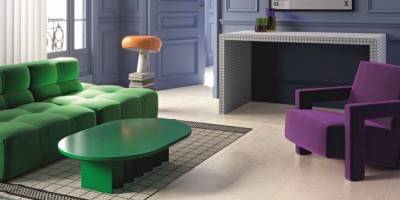 למרות הכל: ענף האדריכלות והעיצוב בתנועה
 רענון אביבי לבית: מבצעים והשקות לפסח
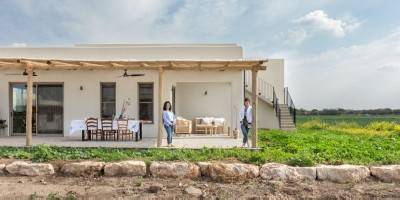 מול הכנרת: בית שמרגיש כמו חופשה - אדריכלות ועיצוב: סטודיו 'רות ולבנה'
 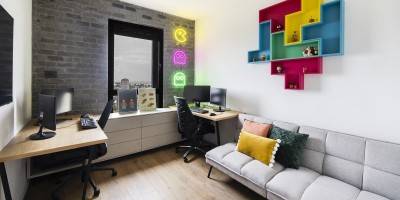 צבע כאמירה של שמחה: השפה האופטימית של סטודיו טולה
 נשים שיודעות לבנות, לעצב ולהוביל
 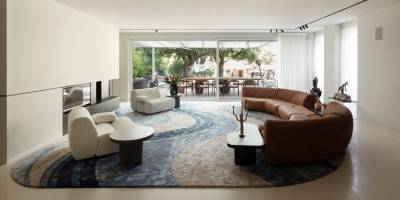 קולקציות 2026 אביב
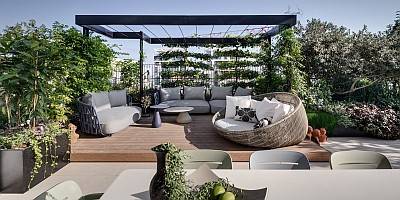 דווקא עכשיו: צאו החוצה מאת שי דוד, מעצב נוף, כרכום
  הגוונים החדשים באקריל - בלורן
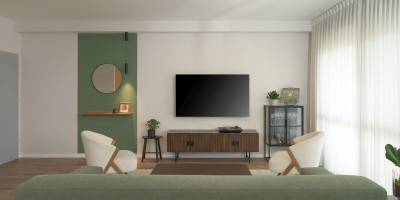 מלון בוטיק פרטי: דירה בראשון לציון שעוצבה כפרק חיים חדש - מעצבת פנים שני חיוט
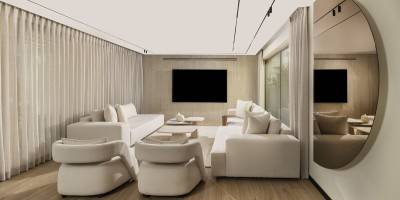 לא רק עיצוב - יצירה מחדש של בית - מעצבת פנים גלית ששון
  הצד השמח של העיצוב: הבחירות שעושות חג בבית
 אהבה על שרטוטים: כשהשיפוץ הופך למבחן הזוגיות
 הוא רצה מודרני. היא חלמה כפרי. והמעצבות? מצאו דרך שלישית
  עולם המטבחים: כל מה שרצית לדעת
 ט״ו בשבט בבית – אדריכלות ועיצוב כדרך חיים המחוברת לטבע