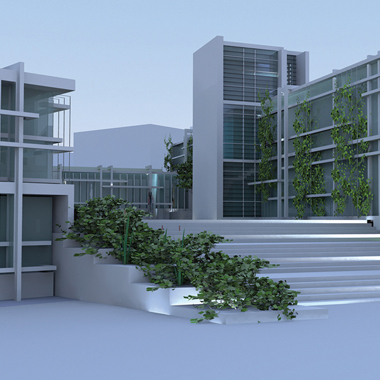
על הפרוייקט:
מיקומה הייחודי של שכונת מוסררה, המוקפת בשכונות יהודיות וערביות, בין בניין עיריית ירושלים, מנזר נוטר-דאם וחומת העיר העתיקה, הופך אותה למקום מפגש מרכזי, המאחד מרקמים וטקסטורות אורבאניים וסגנונות ארכיטקטוניים שונים.
גרעין התכנון מתבסס על בנייתו של "אריג עירוני" שמטרתו ל"תפור" (restitch) מחדש את האריג האורבאני שנפרם בשכונה ולהחיות את המרקם העירוני הן מבחינה מרחבית והן מבחינה תרבותית.
היבטים סביבתיים, חברתיים ותרבותיים:
המרכז הקהילתי ממוקם במיקום אסטרטגי, המאפשר לו ליצור זרימה והמשכיות של פעילויות תרבותיות וחינוכיות לאורכה של השכונה כולה. מקום מפגש זה משמש כפלטפורמה לחיבור ויצירת קשר בין אנשים הבאים מרקעים חברתיים ותרבותיים שונים המתגוררים באזור.
המרכז מהווה פרשנות מודרנית לסגנון האדריכלי הייחודי של ירושלים, על ידי שילובו באריג העירוני. אופן פירוק המבנה יוצר רצף של חצרות פנימיות, היוצרות קשרים בין הפנים והחוץ ומאפשרות לפעילויות שונות להתבצע במהלך לאורך כל שעות היום. גן ציבורי מתוכנן ממול תחנת הרכבת, שיהווה נקודת תצפית לעבר חומת העיר העתיקה.
תכנון ויזואלי:יצירת "שכבות שזורות" בחזיתות המבנה סייעה בשילובם של אלמנטים להצללה ושל הצמחייה במבנה.
תכנון ועיצוב בר-קיימא:
המבנה יוצר ציר פתוח ממזרח אל המערב, המאפשר תנועה דרך המרכז, זרימת אוויר במרחבים הפנימיים ומביא לירידה בצריכת האנרגיה.המרכז משתמש במערכות המתבססות על אנרגיה סולאריות, אנרגיית רוח ואנרגיית מים. צריכת האנרגיה בבניין מופחת במידה ניכרת באמצעות השימוש במקורות אנרגיה מתחדשים, המותאמים לתנאי האקלים המקומיים.
כמו כן, ברחבי המתחם כולו נמצאת צמחייה ייחודית, המותאמת לאקלים הים-תיכוני.
Main Planning Principals:
Musrara neighborhood is located in a unique location, surrounded by many Arab and Jewish neighborhoods, the municipality building of Jerusalem, the Notre-dam Monastery and the old city wall. This makes it a central meeting place that brings together many different urban textures, fabrics and architectural styles.
By analyzing this urban context, it may be concluded that this delicate urban fabric has been unraveled. Therefore, a re-stitching is required in order to restore the area's urban texture. The core of this plan is based on interlaced weaving to create a "Woven Structure".
The Environmental, Social and Cultural aspects-
The community center, located in a strategic place, helps to create a continuous flow of cultural and educational activity throughout the neighborhood. This social meeting place provides a platform for social interaction between the local residents that may come from diverse backgrounds.
This center provides a modern interpretation to Jerusalem's unique architectural style, by integrating into its urban fabric. The sparse layout of the structure creates inner gardens that link the inner space and the outside. Thus, allowing for indoor and outdoor activities throughout the entire day.
A public garden is planned across the train station, to provide an observation spot over to the old city wall.
Visual Design-
The creation of weaved layers in the structure facades helps in combining the shading and vegetation elements.
Sustainable Planning and Design-
The center is using solar, wind, water and energy systems. The energy consumption in the structure is significantly reduced by the usage of renewable energy sources that are adapted to the local climate conditions.
An open axis, from the east to the west, helps create a natural breeze, which ventilates the inner spaces, allows the wind to flow freely up its length and reduces energy consumption.
Also, unique vegetation, that is suited for the Mediterranean climate and uses low amounts of water, is places all around the center.
|


.jpg)


.jpg)

.jpg)