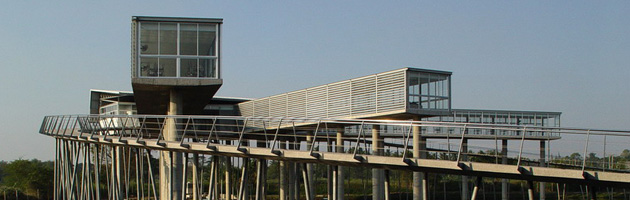
הבעלים של סאטן טקסטיל, מר Schle wood, התעקש על הצורך לספק לעובדים שלו סביבת עבודה טובה יותר, כחלק מהותי של חזונו לבניית התעשייתית המודרנית.
אכילה היה תמיד אירוע חברתי, צורך שהפך לפולחן עבור כל המעמדות החברתיים.
החיים של היום יש הפוגעים בתאוריה הזאת, הביא אותנו חזרה לפעילות פונקציונלי גרידא, ובמיוחד במקום העבודה. בעיצוב קפיטריה במפעל, הנושא הזה קיבל חשיבות עליונה להחזיר את ה"אצולה" לפרק הזמן במהלך האכילה, תוך התחשבות במושגים של עיתוי יעילות המשק.
מסיבה זו בתב"ע הקפיטריה ממוקמת באגם מים, חצי הדרך מפעלי הטקסטיל למבני מפעלי האריגה, המקום הקרוב ביותר ליחידות הייצור הגדולות.
ב תכנית בתב"ע, מיקום זה נהנה מסביבה מושלמת, מעל המים, חסוף לרוחות דרום מערביות וצפון חורפיות. המתחם הוא הועלה 8 מטרים מן הקרקע, המשקיף על הנוף והבניינים סביב .
העמדה הזאת תפקידה לנתק פסיכולוגית את העובדים מההקשר שלהם לעבודה ולמפעל.
כל אדם יש לו מערכת יחסים אינטימית ואישית עם הנוף, בזכות הבידוד של המזח כל פני האגם.
לקבלת הצורה הסופית של המבנה, שרצינו כל שהאלמנטים של הקפיטריה התנגשו או הצטלבו באופן דינמי בנקודה אחת, שהיא מרכז לפעילות הציבורית ומשם משתרעים אלמנטים על פני האגם המלאכותי בצורה כזאת כדי לשמור על כל תוכניות מופרדות .בבידוד זה מזה וכדי לשרת את הקוצפט , אימצנו את צורת העכביש.
הרמפה מתחילה מהשביל ומגיע לקפיטריה ממשיך בצורה קשתית למטה למפעל האריגה. במהלך מסלולו הרמפה משתנה והופכת להיות חלק מקפטריה.[מקום לחלוקת המנות ועובדים] .
הבינין נתמך על ידי צינורות פלדה דקים, צפופים מאוד, התמזגת עם הצמחייה שמסביב עד לגבולות האגם.
הבניין בקפטריה עצמו הוא בר צר ומשיקים ארוכים לרמפה ונשענים על עמודי הבטון הרזה.
הצטלבות של הרציפים להבניין הראשי יוצרים מקומות ייחודיים אשר משמשים תוכניות שונות לשימוש המטבח.
אלמנטים של המבנה
המטבח סגור, כדי למנוע את לריח הבישול להתנדף , אבל זה מזוגג על צידו מול הרמפה, כך שאת פעולת הבישול ניתן לראות על ידי אנשים העומדים בתור לאוכל. התקרה כפולה לבידוד ,האויר הזורם בין הפנלים מקרר את הגג התחתון.
כל הפונקציות סטנדרטיות של המטבח מפעל נכללו. ישנם 4 אזורים עיקריים: המטבח עצמו, עם תנורים, כיורים ושולחנות גדולים, חלוקת ארוחה בשטח אשר פותח על הרמפה, שם עומדים בתור העובדים כדי לקבל את המזון, מחסנים, אזור מקורר למזון,ואזור לשטיפת הכלים. אזורים אלה מחוברים על ציר, המאפשר זרימה יעילה בתוך הבניין.
לאחר שהעובדים קיבלו את האוכל על המגש,הם בוחרים לאכול על אחד משלושת הרציפים המשתרעים על פני האגם. היות והם ממוקמים 8 מטרים מן הקרקע, יש להם אפשרות להתנתק המציאות וליצור קשר אינטימי ופרטי עם הטבע.
קירות הרמפה הם בעצם תריסים המסננים את אור השמש ומאפשרים לאויר לעבור דרך.
The Octospider – Workers’Cafeteria
Concepts
The owner of Satin Textile, Mr. Schle Wood, had insisted on the need to provide his workers and employees with a better working environment, as a fundamental part of his vision for a modern industrial operation.
Eating has always been a social event, a need transformed into a ritual for all social classes.
Today’s life has endangered this act, has brought it back to a mere functional activity, especially in a working place.
In designing a factory cafeteria, it has therefore been of paramount importance to bring back some nobility to the moment of eating, while keeping in mind the notions of efficiency, timing and economy.
For this reason our masterplan has located the cafeteria on the water pond, half way between the textiles finishing buildings and the weaving factory, the closest place to the major production units.
In the masterplan, this location enjoys a perfect setting, above the water, lifted from the ground and exposed both to the South Westerly winds and the Winter Northerly.
The complex is raised 8 meters from the ground, overlooks the building around it and the landscape, and this hovering position help psychologically to remove the people from the context of the factory.
Each individual has a intimate and personal relationship with the context, thanks to the isolation of each pier out over the lake.
For the ultimate shape of the building, we wanted all the elements of the cafeteria to dynamically collide or intersect in a single point, where the center of public activity would be placed, and from there extend over the artificial lake in such a way to keep each program clearly separated from each other. After trying several option, we opted for a spider-like form, able to exactly .
A ramp springs from the main pedestrian path, reaches the cafeteria and arches down to the weaving factory. During its trajectory the ramp transform itself, becoming part of the cafeteria, getting somehow wider to provide some public space under the roof of the building.
It is supported by thin steel pipes, very dense, to blend with the surrounding vegetation that borders the pond.
The cafeteria building itself is a narrow, long bar tangent to the ramp, and resting on slender concrete pylons.
The intersection of the piers and the main building generates unique spaces that are occupied by the different programs of the kitchen.
Elements of the building
The kitchen is enclosed to prevent the cooking smell from invading the air, but it is glazed on its side facing the ramp, so that the act of cooking can be seen by the people queuing for food. The double roofing system is made of a overhanging canopy of light insulated panels, with the wind passing in-between and cooling down the lower roof.
All standard functions of a factory kitchen have been included. There are 4 main areas: the kitchen itself, with stoves, basins and large tables, the meal distribution area which opens on the ramp, where people queue to get the food, the storage rooms, both refrigerated and for canned food, and the wash dishing area close to the garbage room. These areas are connected along an axis, allowing an efficient flow within the building.
After retrieving the food on a tray, people move to one of the three piers, stretching out over the lake.
At 8 meters from the ground, on slender concrete pylons, the piers take people further away from the reality of the factory, putting them in a more intimate contact with nature and granting privacy within a public space.
The side wall along the aisle has a louver system that let the wind go through but protect from sun and rain, and the wall on the eating side has movable shading panels. Therefore the air is free to cross-ventilate through the pier, and the water under the pier itself will help cooling down the eating area.
Client
Mr.Schle Wood
Satin Textile Co. Ltd
Bangkok
Architects
Dorit Mizrahi / Oliviero Godi
Exposure Architects
Via Manganoni 6
24123 Bergamo
[email protected]
Local Architect
Mhun Srireuntong – Civil Tech Design and Consultant Co. Ltd
Bangkok
Construction and field supervision
Sita karnkriankrai – Atis Build Co. Ltd
Bangkok
Design phase
2000-2001
Construction
2002-2004
Location
Patchburi
(80 km west of Bangkok) |


.jpg)


.jpg)

.jpg)