|
לחצו על התמונות הקטנות להגדלה
|
* מקורות ההשראה
המדבר והים הם הגורמים המשפיעים ביותר על העיר אילת ועל הפרויקט.
הרי אילת, הקניון האדום ומפרץ אילת הכחול הם שנתנו לנו את ההשראה.
הפרויקט מורכב משני אלמנטים עיקריים- "קיר המדבר" ו"קיר הים".
בין קירות אלו, התוחמים בניין וכיכר, מתקיים נווה המדבר העירוני- מרכזה החדש של העיר אילת.
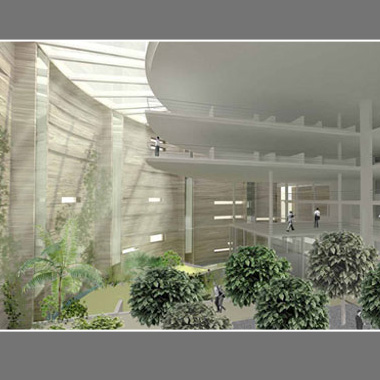
קיר המעטפת התוחם את הדופן החיצונית של המבנה, הוא "קיר המדבר"-קיר כפול ועבה המגן על הבניין ומבודד אותו מן הסביבה המדברית. הקיר מחופה בלוחות אבן מקומית בשכבות אופקיות.
"קיר הים" הוא הקיר שבין הבניין לכיכר. העיר "חודרת" לתוך קיר המעטפת מכיוון שדרות התמרים ובמפגש הזה נוצרת כיכר העיר. "קיר הים" הוא הדופן השקופה והקלה הפונה אל הכיכר ולכיוון הים שהוא שער העיר אל המרחקים ואל הקדמה. הבניין והכיכר מתוכננים כ"נווה מדבר עירוני" שבו צל, מים ועצים הם מרכיב מרכזי בכיכר, המעוצבת תוך שימוש בחומרי בנייה ובצמחיה מקומיים במבנים ובפיתוח השטח.
* תכנון בניין וכיכר המתאימים לסביבה האקלימית והמדברית
תכנון בר קיימא המושתת על עקרונות הבנייה האקולוגית תוך התאמת הבניין לאקלים המדברי.
תכנון הכיכר- המבנים מטילים צל על כיכר העיר על מנת לאפשר פעילות עירונית וקהילתית.
קיימות סביבתית- ניצול המשאבים הטבעיים לצורך חיסכון באנרגיה:
הרוח הצפון מזרחית - קיר המעטפת הכפול מבודד את הבניין וכן כולל בתוכו ארובות לקירור באידוי של הלובי הראשי והחללים הציבוריים, וארובות אור לקומות התת קרקעיות.
אור השמש- תאורה טבעית מבוקרת ומסוננת ע"י פתחים קטנים בקיר המעטפת הכפול והעבה.
"קיר הים" מבודד את הבניין בהיותו מורכב משתי שכבות זיגוג מרווח האוויר בין השכבות מאפשר שחרור האוויר החם. השכבה הפנימית היא קיר מסך מזכוכית בידודית והשכבה החיצונית עשויה לוחות זכוכית מודפסים ומסנני קרינה.
האדמה- התחפרות בקרקע, כמו נחלי המדבר, ליצירת שטחים תת קרקעיים מבודדים וקרירים.
השמש – ייצור אנרגיה חלופית ע"י פנלים סולריים המותקנים על גבי "עצים סולריים" בכיכר ולוחות פוטו וולטאים על הגגות השטוחים של המבנה.
חיסכון במשאבים- שימוש בחומרי בניה מקומיים, אבן ממחצבות "מצפה רמון".
המים- השבת עודפי מי ארובות הקירור ומי המזגנים אל ארובות הקירור באידוי, למזרקות ולצמחים.
* מרכז אזרחי לעיר אילת
מוקד משיכה לתושבים, למבקרים לסטודנטים ולאנשי האקדמיה, תוך השתלבות בסביבה העירונית.
כיכר העיר מתוכננת כחלק מהרצף העירוני המתוכנן בציר העירוני הראשי- שד' התמרים. לאחר העתקת שדה התעופה צפונה, ימשיך הרחוב ויגיע כשדרה ראשית עד לים. לאורך השדרה יפותח המע"ר של העיר בארבעה מוקדים: כיכר הכניסה לעיר במפגש עם דרך הערבה, כיכר הים במפגש עם מפרץ אילת, כיכר העיר ובה בניין העירייה וכיכר השוק.
מתחם העירייה יוצר מרקם אורבני המייצר שטחי חוץ רחבים ומוצלים, מתחם התחנה המרכזית ומרכז הקניות החדש הצמוד אליו מתוכננים כחלק ממתחם כיכר העיר. הבינוי החדש משתלב במרקם הקיים מבחינת גובה המבנים ונפחם. כל הפונקציות המתוכננות במפלס הכיכר הן פונקציות ציבוריות ועירוניות וכן פונקציות אשר יכולות לחזק את אילת כעיר אוניברסיטאית.
הכיכר מתוכננת לפעילות עירונית ביום ובלילה וכוללת עצים ומזרקות מים, פינות ישיבה כולל מדרגות ישיבה מתחת לבניין המערבי ומסך ענק על חזית האגף המזרחי למידע עירוני ולבידור.
*בניין עירייה שיהיה סמל לעיר אילת
בניין אשר יבטא בעיצובו את החיבור והקשר למקום מבחינה נופית ותרבותית, שיהיה סמל לקדמה ולצניעות, ויהווה דוגמה להשתלבות נכונה בסביבה המדברית והאקלימית.
• Inspirations
The desert and the sea are the most influential factors impacting upon the city of Eilat and upon this project. The mountains of Eilat, the Red Canyo and the blue waters of the Gulf of Eilat all inspired us.
The project is made up of two primary elements: “The Desert Wall” and “The Sea Wall”. Between these two walls which encompass the building and square, lies the “Urban Oasis” – the new Eilat City Center.
The building's external envelope is the “Desert Wall” – a thick double wall protecting and isolating the building from the harsh desert surroundings. This wall is clad with local stone slabs in horizontal layers.
The “Sea wall” stands between the building and the square. The city breaks through the envelope from the direction of T'marim Boulevard and this confluence creates the City Square.
The “Sea Wall” is the transparent and delicate screen facing the square and out towards the sea which, like a city gate, opens out to vast spaces and progress.
The building and square are designed as an Urban Oasis in which shade, water and trees are the basic elements and are designed through using local building materials and plants in the structures and landscaping.
• Designing a Building and Square suitable for the surrounding environment
Sustainable design based on principles of ecological construction while fitting the building into the desert climate.
Designing the Square – the buildings cast a shadow onto the square in order to make civic and communal activities possible.
Sustainability – taking advantage of the natural resources to save energy.
The North-Easterly wind – the double-walled envelope insulates the building and incorporates towers for the evaporative cooling of the main lobby and public areas and for light chimneys to underground floors.
Sunlight – natural light filtered and controlled by small openings in the thick double envelope.
The "Sea Wall" insulates the building with two layers of glass. The space between the two layers allows hot air to escape. The inner layer is a curtain wall of insulated glass while the external glass sheets are printed in order to cut down glare and radiation.
The Earth – digging into the ground, like desert streams, creating underground areas protected and cool.
The Sun - an alternate energy source exploited by solar panels mounted on "solar trees" in the Square and photo-voltaic panels on the building's flat roofs.
Saving resources - using local building materials such as stone from the Mizpeh Rimon quarries.
Water – returning excess water from the cooling towers and AC condensers to the evaporative cooling system, fountains, and landscaping.
• Civic Center for the City of Eilat
An activity hub for city residents, visitors, students and academics, blending into the urban fabric.
The City Square is designed as part of the linear urban development planned along the main thoroughfare, T'marim boulevard. Once the airport is moved north, the road will continue and become a main artery to the Sea. Along the boulevard, the City's main business district will develop at three intervals: the entry square where city meets the Arava desert highway, the square at the sea, the City Square with City Hall and the Market Square.
The City Center creates an urban space complete with vast shaded external areas, the central bus station complex and the new commercial center next to it. The new construction blends into the existing city fabric in terms of building height and volume. All the functions planned for the square level are public and civic in nature and include functions to strengthen Eilat as a University town.
The square is planned for civic activities both by day and at night, it includes trees and water fountains, sitting areas including sitting stairs under the West wing and a giant screen on the East wing to broadcast city information and entertainment.
• City Hall as a Symbol of the City of Eilat
A building whose design expresses the connection and attachment to its place culturally and visually, a mark of progress and modesty, standing as an example of proper integration into the desert environment and climate.
|


.jpg)


.jpg)

.jpg)