לחצו על התמונות הקטנות להגדלה

1 | 
2 | 
3 | 
4 | 
5 | 
6 | 
7 | 
8 | 
9 | 
10 | 
11 | 
12 | 
13 | 
14 | 
15 | 
16 | 
17 | 
18 | 
19 | 
20 | 
21 | 
22 | 
23 | |
|
רקע:
בסוף 2005 עלתה תצוגת האופנה "אני נכה וסקסי" במועדון הדום בתל-אביב שהפקנו ויזמנו (אני, רוני ווינר וטליה גלעד – 3 צעירים בעלי מוגבלויות). המטרה היתה להתחיל בשינוי תדמית בעלי המוגבלויות ושבירת מוסכמות. "אני" – הנכה כאדם אינדיבידואל בעל יכולת ורצון לביטוי עצמי. עלו כ-30 דוגמנים מוגבלים למיניהם ובריאים כאחד בעיצוב של מעצבי אופנה בכירים. "אני נכה" – איננו מסתירים את הנכות או מתביישים בה, היא חלק מאיתנו. יותר מזאת, לכל אחד בחברה, יש את הנכות שלו, כולל הדוגמנים הבריאים. "אני נכה וסקסי" – שבירת 2 קטבים ומיזוגן. נכות כפוטנציאל ליתרון וביטוי אישי ייחודי.
קונספט:
הפרוייקט תוכנן כהמשך ועלה כהצעה ממשית לאדריכל האוניברסיטה. ההצעה לא מומשה. העיקרון הוא למקם צעירים בעלי מוגבלויות במרכז החיים היצירתיים והדינמים של סטודנטים לאמנות, כמובילים, אקטיביים ומשרתים בחברה. ולנצל את כוחה החברתי של האוניברסיטה כדי להרים פרוייקט שכזה לחיים. מפאת השוני העצום בין נכויות וזמן מחקר קצר, העדפתי להתרכז בכלי עזר אחד של מספר מוגבלויות: כסא הגלגלים. 5 כללים בסיסיים לנגישות כסא גלגלים שהשתמשתי בהם: 1. כסא גלגלים נע אופטימאלי במישור רציף. השיפוע נע בין 1:20 ל1:15 לתנועה עצמאית. 2. כסא גלגלים דורש שיווי משקל לצדדים 3. מישור יצירת התנועה (ידיים) מקביל למישור הקרקע בגובה של כ-85 ס"מ. 4. מעבר מהכסא החוצה אופטימאלי למישורים בגובה הכסא (כ-45 ס"מ) 5. הפרש גבהים בין אדם עומד ואדם יושב (או שוכב...) לפיכך, התמקדתי באדריכלות שדווקא בעזרת המוגבלות משתמשת במפלסים שונים, ובמישור רציף ביניהם. בפלצנות: "דיאלוג בין מפלסים".
כלים:
נמנעתי מlandscape architecture משום שרציתי להתעסק דווקא במערכות התנועה הנפוצות אשר יוכלו לייצר אבטיפוס זמין ביכולות המציאות הישראלית. 1. מעלית – שירות. "טכנולוגיה" – מהיר, יעיל, שוויוני אך אינו מאפשר ביטוי עצמאות פיזית. 2. מדרגות – ציר חוצה בניין. "אנושות" – לא נגיש, רוב האוכלוסייה שנעה קדימה ולעיתים מביטה לצדדים. 3. רמפה – טיילת המשכית. "טבע" - נגישה, איטית, רציפה, ארוכה ומפאת צרכי נגישות וחוסר במקום מתפתלת בין ודרך האתרים. זאת כמובן בנוסף לכלים המקובלים באדריכלות: חומר, אור, זמן, שקיפות וכו'...
אורבאני:
אוניברסיטת ת"א כיום ישנו חיץ בין האוניברסיטה והסביבה (רמת-אביב, פארק הירקון, נתיבי איילון והרכבת, שדרת המוזיאונים...). לאוניברסיטה ישנו פוטנציאל יזמי-חברתי ענק, כמו כן היא יכולה להחיות את הסביבה ע"י מיזוג נכון. בגבול המערבי עם רמת אביב, ישנם חניונים וגדרות המייצרים אזור "מת" מלבד נק' השקה יחידה – כיכר אנטין (שהכניסה ממנה אינה נגישה לכסא גלגלים). רמת-אביב ב' בנויה עם רצועות ירוקות החוצות אותה. ההצעה: הורדת החניונים מתחת לקרקע ופיתוח האזור כפארק עם מבנים רב-שימושים בדגש על חינוך, אמנות וספורט. פארק זה מתחבר דרך מרכז הקשישים עד לב רמת אביב ב' עם הצופים, מרכז השחמט וביה"ס היסודי (כרגע אזור ירוק לא מעובד). פארק זה ישלב את הקהילה ויתאים לאופי השכונה והקמפוס (שאינו אורבאני). לכיוון מזרח יכולה האונ' להתחבר לפארק הירקון והרכבת עם כפר סטודנטים על גדות נתיבי איילון.
האתר - "כיכר האמנות":
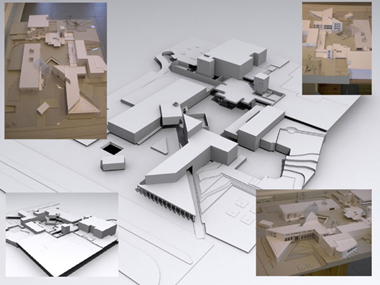
האתר הנבחר הוא אחד מתוך רצף של כיכרות המחברים בין הפארק במערב והרכבת במזרח. חשיבותו בכך שהוא הכיכר הראשונה מעל רחוב חיים לבנון ונמצא מתחת לדשא המרכזי שסמוך לבניין מכסיקו לאמנויות. כרגע האתר הוא חניון המוקף באגודת הסטודנטים, ביה"ס לאדריכלות וגלריה שרייבר. אלו 4 מרכזי אומנות פוריים באונ'. ע"י הוספה של חזיתות ייצוגיות לכיכר מכל בניין, פיתוחה של הכיכר למתחמים, הצבת מסכים והקמת מבנה המרכז הרב תחומי לאומנות המקשר בין הכיכרות לרחוב, נוצר רצף של חלל ציבורי למפגשים מאורגנים וספונטניים שבמרכזו יוכלו להשתלב בעלי מוגבלויות כנותני שרות/מארגנים. נגישות לנכים נוצרת דרך רמפות היקפיות שגם מקשרות לחניונים השונים ומטיילות דרך המבנה המרכזי ומייצרות במות לכיכר.
המבנה:
מרכז בינתחומי לאמנויות: המרכז שולט על כיכר האמנות החדשה ומייצר ביחד איתה מתחם לתצוגות, הופעות, מפגשים סטודנטיאלים והסעדה. המבנה אינו מסתיר את הנוף ומשתמש בגג כשלוחה של הכיכר העליונה. המבנה מקשר בין הכיכרות ב3 סוגי תנועה: מעלית, מדרגות ורמפה אשר מטיילת בין החללים השונים במבנה. חללי התצוגה והפעילות השונים מאורגנים בשקיפות משתנה מסביב לבר המרכזי המשרת אותם במפלסי גובה שונים. כך נוצרים סוגי ישיבה/עמידה שונים של הקהל מסביב מקום אחיד שבו משרתים אותם בעלי מוגבלויות וכאלו שאינם. הרמפה נעה בין פנים לחוץ וחזרה ומשתמשת בכל המפלסים. מגדל רדיו הסטודנטים מהווה נקודת ציון לכיכרות וניתן לראותו מכל האונ'. המבנה מנסה לשמור על צניעות כדי לתת לחלל הפנימי והיצירות עצמם את האימפקט. פירים וחצרות מחדירים אור לכל הקומות ומייצרים מקומות מפגש ביניהן. כל המתחם פועל כמעין "כנסיית" אמנויות. המבנה כולל: בר/קפיטריה, אולם קולנוע, חללי גלריה, רדיו, ומתחת למפלס הקרקע: כיתות, אולם אירועים, חדר מנוחה לנכים/קשישים, מטבח ואזורי שירות. המבנה מתחבר גם לאולם הקולנוע בבניין מכסיקו לאמנויות כדי לייצר מתחם שלם. אזורי השרות מותאמים כך שיוכלו לתפעל אותם בכסא גלגלים. המשך התכנון היה כולל התאמת נגישות ללקויי ראייה, למרות ההתנגשויות בדרישות, ועיצוב הפנים בהשראת יכולות הגוף המתוגברות.
לסיכום:
הפרוייקט לא התקדם הלאה מפאת חוסר תקציבים באוניברסיטת ת"א. חבל, כי יש פוטנציאל לפיתוח באזור, לדעתי. בכל מקרה, ההיסטוריה ממשיכה, והנכים ממשיכים להתקבל לכלל החברה (בצורה הססנית מדי לטעמי). אבל לפחות אנחנו עומדים זקופים מול קניון עזריאלי (בקמפיין האחרון של אופנת כאוס 2006).
Background:
At the end of 2005, a fashion show took place in a popular night club in Tel-Aviv nicked “I am disabled and sexy”, produced by 2 friends and I (all with disability). The mission was to change the stereotype of disabled people and to shake the boundaries. “I” – implies that the disabled person is an individual with a will of self expression. 30 disabled and abled body models, each with different disabilities, had personal designs by top Israeli designers. “I am disabled” – to suggest that there is no shame while maintaining self awareness of the disability. “I am disabled and sexy” – takes the presumed to be opposing images and dissolving them – disability as a potential for advance and self expression.
Concept:
The project was planned as the next stage in this “revolution”. It was proposed as an actual possibility to the university’s architect. It never realized. The principal was to promote young disabled people and let them be at the centre of the artistic, social life of the art students as active participants. And to take advantage of the university’s economic power and commitment to social change to make it really happen. Because of the vast differences between the disabilities, I chose to focus on the wheelchair that serves some of the different disabilities. 5 basic access principles I maintained were: 1. Optimal movement of a wheelchair is in a continuous plane. (Slope should be between 1:15 to 1:20 for independent movement). 2. A wheelchair needs a good balance to the sides. 3. Motion is made by a parallel plane to the floor at the height of about 85 cm. 4. To exit the chair, similar in height areas are optimal (about 45 cm). 5. The difference in heights between different body position (standing, sitting, ling…) To challenge it further, I decided to focus in architecture with different heights and use the disability to make new architectural relationships in it.
Tools:
I avoided landscape architecture, because I wanted to build a prototype out of basic elements which actually are used in the economic reality in Israel. 1. Elevator – used for service. Technology – equally accessible but does not permit physical self expression. 2. Stairs – fast access in the site. Humanity – makes itself adjustable just for some, continues on, occasionally glancing to the side. 3. Ramps – promenade/gallery. Nature – slow, continuous, all-embracing. Because of the accessibility needs and lack of space it wrapps around the buildings and enters them. To this I added the use of the common architectural tools: space, light, motion…
Urban consideration:
Tel-Aviv university campus Today the university is disconnected from its surroundings (City Park, neighborhood, highway, train station and a museum boulevard). It’s a shame, because the university has an enormous urban-renewal potential. On its western border with Ramat Aviv suburb, there are parking lots and fences which create a “no place” accept the only tangent spot – an entrance plaza which is not accessible. The suburb has many long green areas with education centers (from schools, scouts to elderly homes). The proposal is to lower the parking lots underground, and make room for a park with multi uses focusing on education, arts and sports connecting the neighborhood through the university to the train station and city park. This park should integrate the community and fit the suburban state. On its east border the university could connect the train station and park with a students’ village.
The site - “The arts plaza”:
The site chosen, together with the university’s architect, was one out of a sequence of plazas, in different height levels, that connect the new park on the west and the train station at the east. Its importance lies in its location next to the main street and the main plaza in the campus. At the moment, the site is a parking lot serving the surrounding 4 building: The students union, faculty of arts, architecture school and arts gallery. All 4 are productive art and social centers. By adding public presentative facades to the now uninviting buildings, developing the parking lot to an eventful plaza by defining areas and adding screens and stages, and –placing an interdisciplinary arts centre that connect between the plazas and also the street – a space for social encounters is made were disabled people can be part of and even the focus at service and operating positions. Wheelchair access is made by ramps that connect to the parking lots, travel through the facades and main building and create stages and platforms.
The building:
Interdisciplinary arts centre: The building dominates the plaza and together they make spaces for performance, gallery, encounters, auditoriums and food. The building does not block the views and its roof is a projection of the main plaza as a terrace to the arts plaza. The building connects the 2 plazas in the 3 different movement technologies: elevator, stairs and ramp which makes a promenade inside and outside of it through the different areas. All the activity spaces are organized in different levels at changing transparency around the bar. This makes different area with different body posture and mood with equal and unified bar serving them by disabled and abled bartenders. The ramp brings you through everything to the main plaza. The students’ radio tower is a landmark in the campus is visible from far in the park. The building tries to be modest to give the focus on the art pieces and the events themselves. Light cores and inner yards permit light into the digged building. The building’s program contains: a bar, an auditorium, a gallery, radio station, classes, service area, kitchen, events hall, resting room for the disabled and old, statue garden and spaces for sport. The building connects to the existing auditorium in the arts faculty in order to make a grander complex. All service areas are accessible for operation in a wheelchair. Further planning would include accessibility for visually disabled (although it, sometimes, demands opposing needs with wheelchair needs) and interior design influenced by the strengthened abilities caused by disability.
Conclusion:
The project didn’t advance in reality because of the university’s lack of economic ability. It’s a shame, because the site has a big potential. Nevertheless, you can’t stop history…Disabled people continue to effect, as visible in the last fashion show already by a leading fashion company including disabled people. We stand tall right next to the capitalistic Azrieli towers.) |


.jpg)


.jpg)

.jpg)