אנדרטת הניצחון
אתר לאומי לציון ניצחון הצבא האדום על גרמניה הנאצית.
האנדרטה באה לבטא תהליך של מעבר מ"שבר" מלחמתי לבנייה.
אירועים משמעותיים במלחמת העולם השנייה שנבעו מהתמודדותה בגבורה של האומה הרוסית
מול הנאצים הביאו לחילוץ שרידי העם היהודי מטרגדיית הכיליון שכפה עליהם השלטון הנאצי.
בהצבעת ברה"מ באו"ם על הקמת מדינת ישראל נוצק קשר וזיקה גורלית בין העם הרוסי לתקומת עמנו בארצו.
בשנות קיומה של ישראל, יהדות רוסיה וגלי העלייה המסיביים ממנה, השפיעו באופן משמעותי ביותר על תרבותה של המדינה.
המייצב בא להוקיר תודה למדינה הרוסית העוצמתית, ולאפשר לעולים ממנה המתגוררים בארץ ובנתניה באופן מיוחד, חוויית גאווה וזיכרון לתרומתם בעבר ובהווה לארצנו.
על הרעיון העיצובי
- שלוש תתי נושאים ואזורים של מייצב האנדרטה
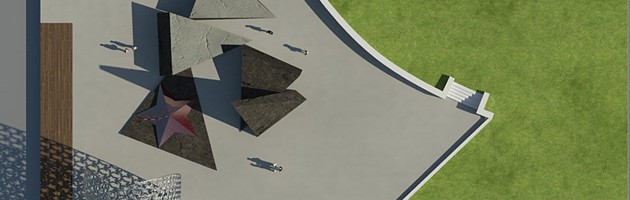
1. גושי אבן שכ"א מהם מסמל את התאריכים המשמעותיים מפלישת הנאצים לברה"מ ועד לניצחון של כוחות הצבא האדום, האמריקאים והבריטים על הצורר הנאצי.
גושי האבן מסותתים בגיאומטריה וגרפיקה "חזקה" ומכוונת. ה"משולשים" יוצרים תחושת תת-הכרתית ש"מדובר" בכוכב האדום...נמצאים בהעמדה מרחבית :פלישה – התמקמות (הנאצים) – הדיפה – וניצחון.
המתחם הנ"ל, נועד ליצור חוויית "כאוס" ואימפקט חווייתי לאירועים בכל אחד מהתאריכים.
הגושים מסמלים את מצבי הלוחמה הנ"ל על פי הכרונולוגיה:
• 1941 – פלישת הנאצים לברה"מ.
• 1942 – הקמת מחנות ריכוז והשמדה של הנאצים באירופה.
• 1943 – הדיפת הצבא האדום בגבורה את הנאצים חזרה לתחומי פולין.
• 1945 – ניצחון כוחות הצבא האדום, האמריקאים והבריטים של הנאצים.
*טקסט בעברית וברוסית על המאורעות והתאריכים יהיו מוטמעים ואו נוספים לכ"א מהגושים.
חומרים: גושי אבנים בגוונים וטקסטורות.
2. כוכב הצבא האדום כחולייה מרכזית מקשרת בין "שברי" המלחמה והניצחון,- כמעצמה עולמית משמעותית ומרכזית שתרמה בקולה להקמת מדינת ישראל.
הכוכב נטוע ע"ג משטח הרחבה. – מסמל יציבות ונוכחות דומיננטית.
חומרים: - במה - בטון + גבישים מינראליים /או/ אבן מסותתת.
- כוכב - נירוסטה
3. מבנה בעל צורה אורגאנית הבנוי משני חלקים שכל אחד בנוי מסמלי הלאום. האחד, – מגן דוד, והשני, הכוכב האדום הרוסי.
הגיאומטריה של המבנה יוצרת בו זמנית השקה בין המעצמה הרוסית ומדינת ישראל.
המונומנט יוצר מצד אחד מיקרו סביבה בעלת שפה עדכנית,"צומחת" ומגוננת.
ומצד שני, בשל מבנהו הרשתי, משתקף הים לכל אורך הגזרה ותחושת הביטחון החיפוי וה"הגנה" שמעניק המבנה, מתחברים למרחב אין סופי רווי צבעים, שינויי תאורה לאורך הימים, שינויים אקלימיים ומבט לאופק אין סופי – יוצר תחושת אופטימיות ו"צפייה" לעתיד.
חומרים : מבנה/מודולים מנירוסטה /או/ בטון יצוק מגוון בשבלונות רצויות.
*תאריך הכרזת המדינה וטקסט בעברית ורוסית על תרומת רוסיה לתקומתנו.
The installation proposed includes a sequence of scenes which create an empowering experience from the shatter- towards victory and revival.
The founding events from 1941 and until today are translated into physical objects in diverse morphology and materials which are intended to provide the visitor with the essence of an experience influenced by the events which took place during such timeline.
The installation combines architectural and sculptural symbols and idioms influenced by different periods and traditions of both the Russian and Israeli nations.
The visitor's tour is "channeled" in a way in which the transition and transparency of the scenes strengthens the experiential process from "chaos" and "zigzagging" between powerful structures which are placed in sharp angels (war and survival) towards harmony and a view to the horizon and an infinite life space.
The sight is intended to absorb visitors throughout the day, and to create enriching experiences and provide such visitors with the possibility to identify with national events which are of joint fate of both the Russian and the Jewish nations as well as the country of Israel.
To those originated from the Commonwealth of Independent States, the Russian immigrants, the monument provides a sense of pertinence and a common destiny with the Jewish nation and the country of Israel.
The sight constitutes an embracing and dynamic monument which is intended to absorb visitors for a long term visit.
The path brings the visitors at the end to be found in the open space, where they can think about the experience which this place has provided, relax and gaze at the horizon, engage in a social conversation overlooking the beautiful view etc.
Detail:
Scene A: 4 (four) blocs of marble/stone in tendentious and stiff geometrical figures and with corresponding colors.
The bloc area is located near the entrance of the site, and includes:
First bloc (northern) – represents the Nazi invasion to Eastern Europe in 1941.
Second bloc (from North to South) – represents the gain of control by the Nazis, their settlement in Eastern Europe and their establishment of ghettos and extermination camps in 1942.
Second bloc (from South) – represents the pushing back of the Nazis to the Polish borders by the Red Army.
Southern bloc (vertical) – represents the victory of the Red Army, the Allied forces and Britain over the hostile Nazis.
Despite the "threatening" and frantic space, small apertures are discovered, and through them horizon, blossoming revival and future are revealed.
Scene B: A pyramid combined with the Russian star symbol on its vertex. The star – a typical symbol of the courage of the Russian nation. The element crosses between the destruction of the war on one hand and the arc of life on the other, and ties between the past, present and future.
Scene C: Following the curve bypassing the "bloc of victory" lies a wide open space of construction, blossoming and revival. This space includes: an "embracing" wave which is made of modules in the shape of stars, providing a "shelter" experience/feeling of protection to the visitors entering such space. The wave is a fictitious continuation of the wave coming from the sea. It is made of a sequence of stars which include in addition to the Red Army symbol, a resemblance of eternity, "cosmic" etc.
Within its space and at the foot of the west side of its base, emerges a pole out of a ramp and in an upward position, grows a magnificent olive tree. The olive tree– a symbol of the strong local connection of our nation to its land.
This scene visualizes the survivability of our nation in the land of Israel. The voice of the Russian nation constituted a significant influence for such feasibility, while the Soviet Union voted in the United Nations for the establishment of the State of Israel in 1948.
Basalt stones, signposting and lighting form additional components within the scenes. Such components will complete the information, will strengthen the visual experience and will cherish those who have contributed to the establishment of the State of Israel.
|


.jpg)


.jpg)

.jpg)